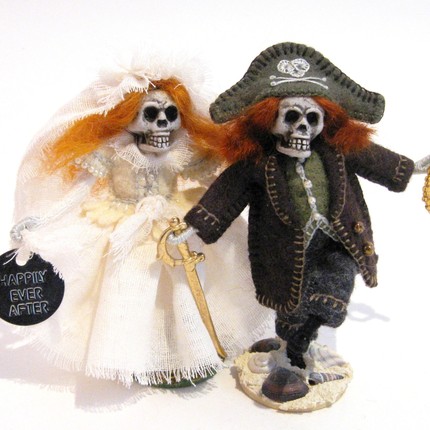
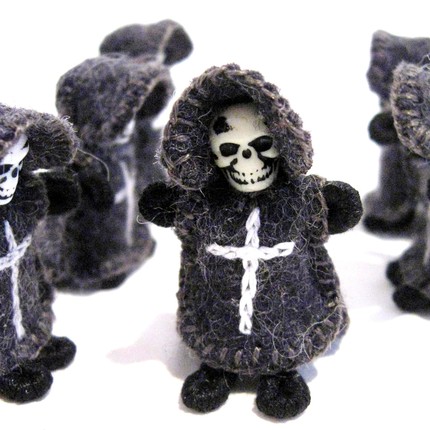
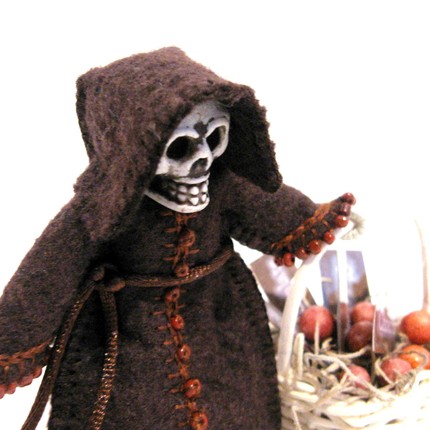
Now is the time to think about your Halloween decorations and I thought it would be fun to see what the ETSY shop owners are selling for this trick or treat fun holiday. I was taken in by “Two Left Hand’s Shop” with its smashing array of adorably scary dolls. Mrs. Two Left Hand’s lives in a little cottage on a little lake in Michigan with her husband and their two adorable dogs. Muffie is a Shitzu and Poker is a Cocker Spaniel. They have three grown kids and nine beautiful grandkids, five boys and four girls. She has been sewing for as long as she can remember and because she has never been good at taking instructions (she always does first and reads later) she never know exactly what she will come up with. She loves doing needlework and experimenting with different embroidery stitches. Most items are made from wool felt, wool roving, gauze, bead, pearls, glue, floss. Every holiday is celebrated in this shop, so visit often.
Have you read?
Book Review: The No-Brainer Brain Explainer
Human brains are pretty amazing, allowing us to think, feel, create, communicate, move and more. But humans aren’t the only animals with cool brains, as Crab Museum explains in the book The No-Brainer Brain Explainer (illustrated by Bruno Valasse).
This book, aimed at kids in grades 1-4, is colorful and silly but also educational about how brains actually work, with billions of neurons sending electrical and chemical signals around the body.
“Everything we think, feel and experience comes from an electrical relay race, with neurons passing chemical batons to each other,” the book says. “The constant chatter of billions of brain cells creates your entire world.”
The book compares the brains of mammals to those of crabs (the book is “written” by a crab after all) and notes that crabs have fewer neurons and of course are much smaller, but they have separate parts of their brains that control their eyes and their legs. Crabs are also capable of remembering things, using tools and solving puzzles.
Some animals’ brains allow them to know more about their world in different ways from humans, such as spiders being sensitive to vibrations in their webs and catfish having an amazing sense of taste, with taste sensors all over their bodies.
It notes that 95 percent of brain activity goes toward things we do unconsciously, like breathing, walking and catching a ball flying toward us. It also talks about dreams, memory, how our emotions try to predict the future, where brains came from and fun facts about brains. For example, did you know a sperm whale is believed to have the biggest brain of any creature that’s even lived? Their brains weigh 18 pounds, compared to just 2.5 pounds for humans.
Information on what creatures have the smallest brains, the toughest brains, the most brains and those who actually eat their own brains will delight kids (and maybe gross them out a little bit). They’ll also enjoy learning about the mycelium network of fungi, which is like a brain without a body, and slime molds, which are like a brain without a brain.
It ends talking about why human brains are so special because we’ve found ways to work together, communicate and build communities on a scale bigger than any other animal.
Kids and adults alike will enjoy this colorful, silly and informational book about brains!
About the book: 64 pages, hardcover. Published 2026 by Wide Eyed Editions. Suggested retail price $19.99.


