• Home
  • Suggest A DIY
  • DIY Newsletter

Craft Gossip

Independent craft blog since 2007

  • About CraftGossip
  • Our Network
    • Bath & Body Crafts
    • Candle Making Ideas
    • Crochet Ideas
    • Cross Stitch
    • Edible Crafts
    • Felting Patterns
    • Glass Art
    • Home & Garden Ideas
    • Indie Crafts
    • Jewelry Making
    • Kids Crafts
    • Knitting Patterns
    • Lesson Plans
    • Needlework
    • Party Ideas
    • Polymer Clay
    • Quilting Ideas
    • Recycled Crafts
    • Scrapbooking
    • Sewing Patterns
    • Card Making
    • DIY Weddings
    • Not Craft Ideas
  • Giveaways
  • Roundups
  • Store
  • Search

Tie Chair. To Restrain Your Child?

April 11, 2010 by Shellie Wilson

Tie Chair.

Well I came across this product via a facebook feed and wondered what everyone’s initial thoughts were.

This product is marketed as a portable solution to out and about trips where there is no high chair. The main aim is to secure the child from falling off the chair.

However when I look at it, I think it’s not very suitable as firstly it doesn’t raise the child to table height and secondly it looks more like a tethering system to stop your child from getting up whilst your having dinner.

I would love to know what everyone else thought of this?

Is it something you would use?
«
»

Comments

  1. Vickie says

    April 11, 2010 at 3:48 am

    Looks like a restraint to me–also I could see it being a possible danger (depending on age of child)-and I agree child would be at a disadvantage as far as height goes,cheers Vickie

  2. zenzhey says

    April 11, 2010 at 4:46 am

    I think this could actually be dangerous. If the child struggles to try to get up he could fall and the chair would fall on him. I would not use it. I find it kind of weird…

  3. Jenny says

    April 11, 2010 at 5:17 am

    I have mixed feelings about this. I agree that it’s not the most practical thing, and it does give me a little creepy feeling to see a baby tied to a chair; however, we had a friend bring one to our home back BC (before children) so that she could feed her baby and let him sit with us. She just turned the chair so that it faced her, so no issues with the table height. He felt a part of the meal, instead of plopped in his car seat or squirming on her lap.

    The child in this picture is a little old, IMHO. That child could sit in a chair just fine. Our friend’s baby was about 9-12 mos…just the age where he could fall off. Also the age where he couldn’t walk around but wanted to crawl around – okay in my home but not in a restaurant!

    I think this is not an ideal solution, but a great portable thing to leave in the car for those times when you have no other choice for a high chair.

  4. deborah says

    April 11, 2010 at 5:28 am

    We had a diaper kind of thing for the first kid and couldn’t find it for the second kid. It was amazing. We didn’t have to use those messy high chairs that are never clean and the kids get to sit ANYWHERE! As long as it was a chair with a back that the kid wouldn’t fall through, the diaper thing was great and she loved it. It didn’t matter if we were at McDonalds or a nicer restaurant or if we stopped at a hot dog stand that had tables and chairs.

  5. Teresa Cammarano Walsh says

    April 11, 2010 at 5:48 am

    You’re right – they’re only suitable for children who are old enough anyway to sit at a table without being raised up and by that age they’re more than capable of sitting on a chair without falling off – I guess at that stage you’ve figured out whether you’re the kind of parent who finds it necessary to tie a fidgety child to the chair, or one who’s found enough patience to teach them to stay put! 🙂

  6. MaryK says

    April 11, 2010 at 7:18 am

    I have seen these used when there is no highchair available. It would come in handy when visiting grandparents or friends who have no young children. A telephone book can be used to boost a child up high enough to eat at the table.

  7. Rachel says

    April 11, 2010 at 10:53 am

    I would totally use this!! I think it may need to be able to tie in the back rather than the front, though, and it would have some stain-repellent properties.

    I see no problem with tying the child in to keep them from getting up during dinner. Sometimes kids just need a little help with impulse-control. Like everything else, some kids it would probably be great for, others, not so much.

  8. Emily says

    April 11, 2010 at 11:18 am

    I actually sewed something similar for my son when we went on vacation- we were staying at a B&B and they didn’t have a highchair. It worked out well although we had to put a few phonebooks underneath him. We’ve used it a few times since then, mostly at my in-laws house, and again with a pillow or phonebook underneath him. We don’t use it as much as I thought but it comes in handy from time to time.

  9. alison says

    April 11, 2010 at 11:57 am

    I’ve got a similar thing to this and have found it really useful on several occassions. I have used it with highchairs that don’t have straps to keep the baby secure (which are very common in Europe) and also on chairs in restaurants. It deosn’t raise the baby but for young babies this doesn’t matter as much as giving them a safe place to eat does. I guess you could keep them sitted in their strollers and feed thm their but some places don’t let you take the strollers in.

    However, I have never used it on a child as big as the one in the picture. I doubt any child over about 15months would let you put them in it. With small babies it really is useful for travelling and keeping them safe.

  10. Lindsey says

    April 11, 2010 at 12:29 pm

    My kids would have just untied it. But it might work for some.
    I did have a problem with my kids slipping off of the seats when they sat on big wooden chairs. I always wished for something that you could pull up and secure behind the seat so they wouldn’t slip off. Kind of like the harness from a bouncer or baby swing.

  11. Amy says

    April 11, 2010 at 12:49 pm

    I have something similar to this (nowhere near as cute) and love it! My 19 month old loves it too… he feels much more secure than just sitting on the chair, or in a regular restaurant booster seat, and it allows him to sit in “big chair” like his big brother.

  12. Rosemary says

    April 11, 2010 at 2:32 pm

    I had one of these twenty years ago. It’s great to keep in your totebag in case of emergency.

  13. Sarah Lou says

    April 11, 2010 at 4:39 pm

    Ive used my ring sling to “restrain” my child at a restaurant, thats been out of high chairs — its just not suitable for a one year old who wants to go everywhere to be walking around a busy restaurant, no matter how much he would like. I would use it. Height wise you can get around.

  14. JK says

    April 11, 2010 at 7:19 pm

    How funny! My MIL used this idea but with just a pillow case on a bar chair (with a back) since we were in her home that didnt have a high chair. It worked great, but I’m not sure I would used that method on a daily basis! This is certainly much cuter than a pillow case though!!!

  15. Lisa says

    April 11, 2010 at 10:11 pm

    My Mom had one of these for an old high chair that didn’t have a safety belt. It works moderately well, but MUST be used with an adult nearby. If you tie it tight it keeps the child from falling forward or sideways and slows them down from standing up. Make sure its made of good THICK sturdy fabric though!

  16. Allison says

    April 12, 2010 at 3:50 am

    My friend has one of these, and her currently 10month old son loves it. I agree that the seating level is lower than table height – but the day I saw them with it we were at a coffee shop which had lounges (where we sat) & we pinched a nearby table’s chair, so the child wasn’t actually at a table as such anyway – and it worked a treat!! So much so I was going to try to copy the design and make my own (but it looks a bit complicated?).

  17. Alexa Sparklin says

    April 12, 2010 at 5:59 am

    I was given a rudimentary one of these when I had my little boy. It is exactly as you say. It doesn’t raise him up to the table, it just keeps him ‘tied’ to the chair. Let’s just say it isn’t very popular in our house.

  18. Betsy says

    April 12, 2010 at 6:18 am

    I used to do something similar when my son was small if we visited someone who didnt have a highchair. I would take a cloth diaper and tie around his middle just to hold him in the chair. I didnt push it up to the table, though. Just fed him that way.

  19. Lauralee Hensley says

    April 12, 2010 at 11:59 am

    I wouldn’t use it. Just doesn’t look safe to me.

  20. Leigh Anne says

    April 12, 2010 at 1:31 pm

    I would certainly not use it. It just doesn’t seem very functional or practical for that matter.

  21. Emily says

    April 12, 2010 at 9:47 pm

    I have one – my mom got at a craft fair of sorts (although it is not handmade). It’s made of a knit fabric and the ties are in the back. We got it to be used while on family vacation where we never knew if we’d find a high chair (and for places like a hotel where you don’t have access to them). It works great — like other people said mostly for younger kids (ones who either are too little to sit without a high chair (8mos or so) or older but not steady enough to sit by themselves (like a 2yr old who wants out of the high chair but would slide off the chair). My daughter is 20 mos old and it’s alright. It was especially useful when she was just starting to eat solid foods but needed full attention (and about four extra hands) for a person to feed her. Not torturous at all… but I do think the model in the photo is much much too old. Children at that age should know how to sit and eat at a table without restraint.

  22. Loralynn says

    April 13, 2010 at 7:43 am

    I think it’s fantastic! I would have totally used this for my children, even though my children learned to stay in their seats at an early age because I didn’t allow them to roam around. One of the most annoying things at a restaurant is to have someone elses child running around or popping up at your table when you are trying to eat. Especially when you have well behaved children. To teach a little restraint is a good thing. I know I won’t be popular saying it, but I’m sure many of you are nodding your heads!

  23. Shirley says

    April 13, 2010 at 9:43 am

    I don’t think much of the version shown, its far too complicated and the bow in front would be a hinderance rather than a help. However the general idea is a good one for a child that just needs a bit of support and there is no high chair available.
    The notion of using reins on a child causes uproar though with some people, so I can imagine that this would not be too popular!
    In both cases I feel that safety is more important than sentiment!

  24. melissa says

    April 15, 2010 at 4:59 am

    It looks like something you could use for older children who don’t sit properly at the dinner table as well. I would certainly use it. Children need to know how to sit and stay in their seat at the table, for safety and manners. The children in these photos appear comfortable and safe. This is functional and practical!

  25. Bonnie says

    April 16, 2010 at 9:18 pm

    I made one of these chair slings when my son was small. (He’s 30 now.) I made it so it tied in the back, and the child could sit in a booster seat to elevate to table height. It was quite handy when we were without a high chair. And it wasn’t ever dangerous. Last week I was in a restaurant in which a mom had put a toddler in a regular adult chair. The mom didn’t pay attention to the little girl, and she squirmed and fell off the chair head first. I would much rather have seen her in one of these slings!

Have you read?

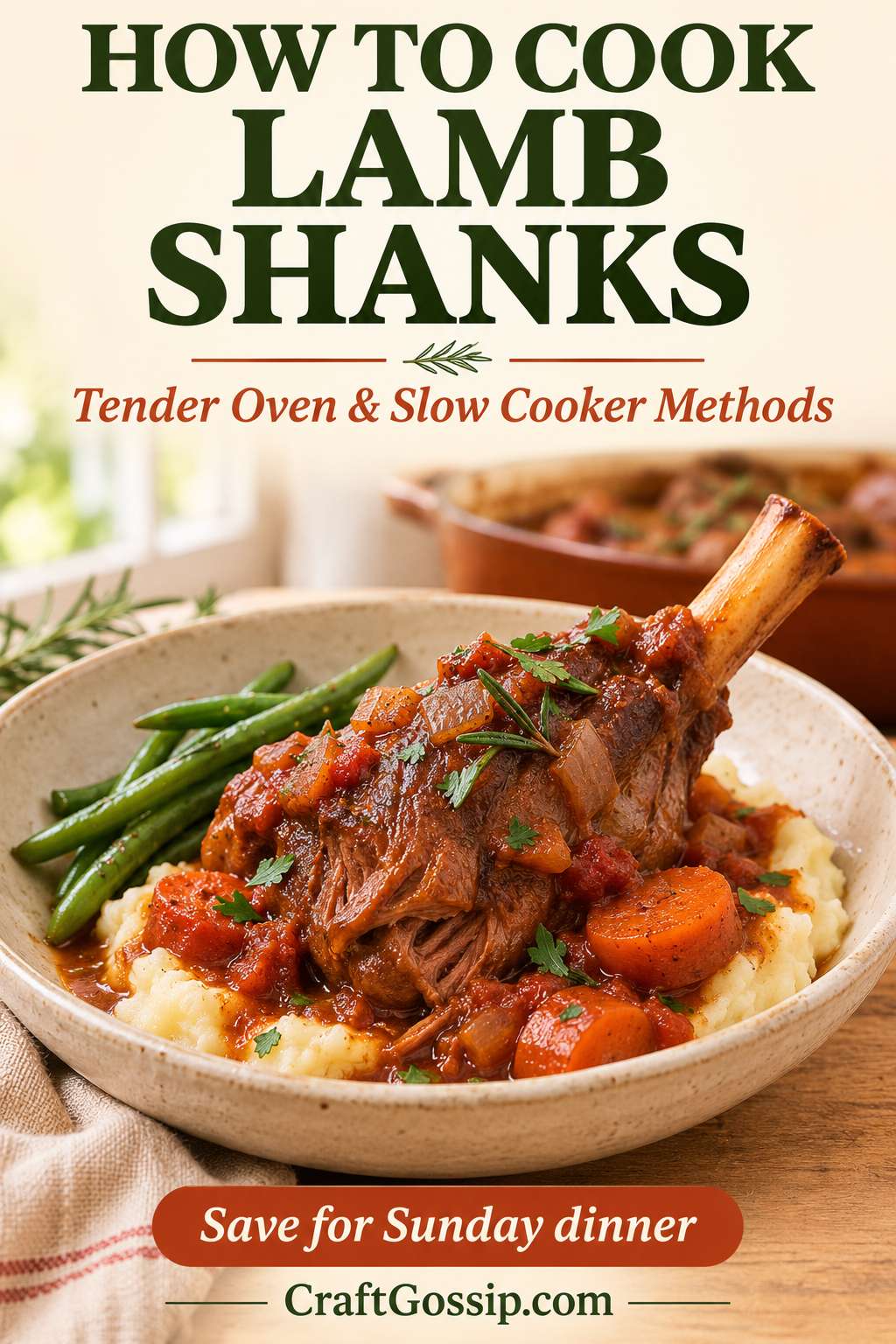
How to Cook Lamb Shanks: Tender Oven and Slow Cooker Methods

The best way to cook lamb shanks is to brown them, then cook them slowly in a covered pot with stock, vegetables and herbs until fork-tender. Allow roughly 3 to 4 hours in a 160°C conventional oven, or 8 to 9 hours on low in a slow cooker. Size matters, so check the meat rather than relying on the clock alone.

Lamb shanks look like the sort of dinner you order when someone else is doing the washing up. A generous spoonful of mash, rich gravy and meat that slips away from the bone makes a very convincing restaurant meal.

At home, the process is surprisingly manageable. There is a little browning and chopping, then a long, gentle cook. No complicated carving, no last-minute juggling of three frying pans.

This guide explains how to cook lamb shanks in the oven, slow cooker or on the stove, with a rosemary and tomato recipe that needs no wine. There is also a red wine variation if that is the flavour you fancy.

Why lamb shanks need slow cooking

Lamb shanks come from the lower leg, a hardworking part of the animal with plenty of connective tissue. A quick cook leaves that tissue chewy. Long cooking with moisture helps it soften into the tender texture we want.

Think of this as a braise: the meat sits partly in liquid inside a covered pot. The aim is gentle cooking, rather than a fierce boil or an uncovered roast.

Buy similar-sized shanks so they finish at roughly the same time. Allow one per adult for a generous main course, remembering that some of the weight is bone.

How long do lamb shanks take to cook?

Use these as starting ranges for fully thawed shanks weighing about 350 to 450g each. They are cooking times, excluding browning and sauce finishing.

MethodSettingApproximate cooking time
Oven, tightly covered160°C conventional / 140°C fan / 320°F3 to 4 hours; start checking at 2½ hours
Slow cookerLow8 to 9 hours
Slow cookerHigh4 to 5 hours
Stovetop, coveredBare simmer2½ to 3½ hours

Larger shanks may take longer. The lamb is ready when a fork enters the thickest meat easily and a gentle twist separates it into soft pieces. For a neat plated serving, stop while the meat still holds loosely to the bone.

Easy lamb shanks with rosemary and tomato

This no-wine lamb shank recipe makes a chunky sauce with everyday vegetables. A little balsamic vinegar adds brightness at the end, while lemon zest and parsley are optional finishing touches.

Serves: 4
Prep: About 20 minutes
Cooking: About 3½ to 4½ hours, including browning and finishing
Equipment: A large, ovenproof casserole with a tight-fitting lid, usually about 6 to 7 litres. Check that your shanks fit before starting.

Ingredients

  • 4 lamb shanks, approximately 350 to 450g each, fully thawed
  • 2 tablespoons olive oil, plus a little extra if needed
  • ½ teaspoon fine salt, plus more to taste
  • ½ teaspoon freshly ground black pepper
  • 2 brown onions, sliced
  • 2 medium carrots, cut into thick rounds
  • 4 garlic cloves, chopped
  • 1 tablespoon tomato paste
  • 1 teaspoon sweet smoked paprika
  • 1 x 400g tin chopped tomatoes
  • 750ml reduced-salt beef or chicken stock
  • 2 small rosemary sprigs
  • 1 bay leaf
  • Hot water, as needed to adjust the liquid level
  • 1 to 2 teaspoons balsamic vinegar, to taste
  • Chopped parsley and finely grated lemon zest, optional, to serve

1. Heat the oven and prepare the lamb

Preheat the oven to 160°C conventional or 140°C fan.

Pat the lamb dry with kitchen paper and season with the salt and pepper. Trim loose, thick pieces of external fat if needed. There is no need to remove every bit of connective tissue or make the bones look restaurant-perfect.

2. Brown the shanks in batches

Heat the oil in your casserole over medium-high heat. Brown two shanks at a time, turning with tongs to colour the meaty surfaces. Allow about 8 to 10 minutes per batch, adjusting the heat if the pot begins to scorch.

Transfer to a plate. Spoon off excess rendered fat, leaving about a tablespoon in the pot.

An awkwardly shaped shank will never sit flat on every side. Aim for good colour where you can, rather than wrestling it into submission.

3. Soften the vegetables

Reduce the heat to medium. Add the onions and carrots and cook for 8 to 10 minutes, stirring occasionally. Add a little oil if the pot is dry.

Stir in the garlic for 30 seconds, then add the tomato paste and paprika. Cook for another minute, stirring so the spices do not burn.

4. Add the braising liquid

Pour in a little of the stock and scrape up the browned cooking juices. Add the remaining stock, tomatoes, rosemary and bay leaf.

Return the lamb and any juices from the plate. Nestle the shanks into the vegetables. The liquid should reach roughly halfway to two-thirds up the meaty portions. Add hot water if needed, or use a snugger pot if the shanks are sitting in a very shallow puddle.

Bring to a gentle simmer, then cover tightly.

5. Cook slowly until tender

Transfer the covered pot to the oven. Begin checking after 2½ hours, turning the shanks carefully and checking the liquid level. Add a splash of hot water if the sauce is getting thick before the meat is tender.

Continue cooking, checking every 30 minutes, until a fork slides easily into the meat. Expect around 3 to 4 hours overall, depending on the shanks and your oven.

If the meat is still resistant but moist, replace the lid and give it more time. Turning up the heat is rarely the helpful shortcut we hope it will be.

6. Finish the sauce

Lift the tender shanks onto a warm platter and cover loosely. Remove the rosemary stems and bay leaf, then skim visible fat from the sauce.

If the sauce is thin, simmer it uncovered on the stove for 10 to 15 minutes, stirring occasionally. If it is too thick, add a little hot water.

Stir in 1 teaspoon balsamic vinegar, taste, and add the second teaspoon only if needed. Adjust the salt and pepper after reducing the sauce.

Serve the lamb with plenty of sauce and, if using, parsley and a little lemon zest.

How to cook lamb shanks in a slow cooker

Brown the lamb and cook the vegetables as above. For the slow cooker version, reduce the stock to 400ml, keeping the tin of tomatoes and other ingredients the same. Slow cookers lose much less moisture than an oven casserole.

Deglaze the pan with some of that measured stock, then transfer everything to a slow cooker large enough to hold the shanks comfortably. Follow your appliance’s minimum and maximum filling guidance.

Cover and cook for 8 to 9 hours on low or 4 to 5 hours on high, until fork-tender. Avoid repeatedly lifting the lid.

Remove the cooked shanks and finish the sauce in a saucepan on the stove. Add the balsamic vinegar after reducing. Do not put a ceramic slow cooker insert on a burner unless its manufacturer specifically allows it.

Can you cook lamb shanks on the stove?

Yes. Follow the main recipe through to adding the liquid, then keep the tightly covered casserole over the lowest heat that maintains a bare simmer.

Allow approximately 2½ to 3½ hours, turning the shanks occasionally. Check the bottom of the pot and liquid level regularly, because direct heat can catch the sauce. Add hot water as needed and cook until tender.

How to make red wine lamb shanks

For the oven recipe, replace 250ml of the stock with 250ml dry red wine. After cooking the tomato paste and paprika, add the wine and simmer for 3 to 5 minutes before adding the remaining 500ml stock and other braising ingredients.

Taste before adding the finishing vinegar, as you may not need it. Cooking with wine does not guarantee an alcohol-free meal, so use the no-wine version when alcohol must be avoided.

If you enjoy this flavour combination, our recipes to cook using red wine include more ideas for hearty dinners and desserts.

Why are my lamb shanks still tough?

Firm, chewy meat usually needs longer cooking. Check that there is still enough liquid, cover the pot and continue gently in 30-minute intervals.

Dry, stringy meat needs a different response. It may have cooked too fiercely, lost too much moisture or been left long beyond tenderness. Shred it into the sauce rather than continuing to cook it indefinitely.

A watery sauce does not mean the lamb needs longer. Remove tender meat first, then reduce the sauce separately.

A salty sauce needs dilution. Add a little water or unsalted stock and avoid reducing it further. Reduced-salt stock gives you more control from the beginning.

What to serve with lamb shanks

Creamy mashed potato is an obvious favourite because it catches all that sauce. Soft polenta, butter beans or mashed sweet potato work well too.

Add steamed green beans, peas or broccoli for something fresh alongside the rich meat. For more choices, our side dishes to go with stew include breads, vegetables and potato dishes that also suit a saucy lamb dinner.

To stretch leftovers, remove the bones and serve the shredded lamb and sauce over baked potatoes or through pasta. If you are planning another warming lamb meal, have a look at our one-pot lamb and chickpea curry feature.

Making ahead, storing and reheating

Divide the lamb and sauce into shallow containers for faster cooling and refrigerate within two hours. Keep the fridge below 5°C and eat refrigerated leftovers within three days.

Alternatively, freeze portions with their sauce for up to three months. Thaw in the fridge and use within 24 hours of defrosting, following the NSW Food Authority’s leftover-storage advice.

Reheat only the portion you need in a covered saucepan with a splash of water, turning gently until steaming hot throughout. Aim for at least 75°C in the centre, checking the thickest meat away from the bone with a clean food thermometer.

If making the dish a day ahead, lift off the firm layer of fat from the chilled sauce before reheating. It is much easier than chasing little pools of fat around a hot casserole.

More lamb shank questions

Do lamb shanks need to be completely covered in liquid?

No. For the oven recipe, halfway to two-thirds up the meaty portions is enough when the lid fits tightly. Turn them during cooking and replace lost liquid as needed.

Can you cook lamb shanks without browning them?

Yes, but browning adds colour and a deeper savoury flavour. It is a worthwhile step when you have time.

Can you overcook lamb shanks?

Yes. They are forgiving, but very prolonged cooking can leave the meat stringy or cause it to fall apart completely. Stop when the texture suits the way you want to serve it.

Can I use a roasting dish instead of a casserole?

Yes. Brown the meat and prepare the sauce in a separate pan, then transfer to a deep ovenproof dish. Cover tightly with an oven-safe lid or a double layer of foil. A wide dish may need more liquid, so check during cooking.

Can I start with frozen lamb shanks?

For these instructions, thaw them fully in the fridge first. Frozen meat changes cooking times and is unsuitable for this slow cooker method.

Once you understand the gentle heat, covered pot and tenderness check, lamb shanks become a very approachable dinner. Put the mash on near the end, warm the plates and give that lovely sauce somewhere to go.

RSS feed: More Articles More Articles

  • Christmas Stick and Stitch Embroidery Pattern – Etsy Review
  • A Nostalgic Christmas Pudding Knitting Pattern for Your Handmade Decorations
  • Quilt As You Go Tutorial (Beginner-Friendly Step-by-Step Guide)
  • Etsy Feature – Bread Pan Pottery Template
  • 10 Bucket Hat Knitting Patterns for a Fun Handmade Wardrobe
  • 10 Free Hot Water Bottle Cover Knitting Patterns for Cosy Nights
  • How to Make a Thanksgiving Family Recipe Scrapbook
  • 10 Triangle Scarf Knitting Patterns for Cosy Layers and Handmade Gifts
  • Free Christmas Pudding Cross Stitch Gift Tag Pattern With DMC Colour Key
  • 10 Thanksgiving Math Printables for Kids: Counting, Addition and Fun Number Puzzles

Pick Your Blog

  • Sewing
  • Knitting
  • Quilting
  • Crochet
  • Home & Garden
  • Recycled Crafts
  • Scrapbooking
  • Card Making
  • Polymer Clay
  • Cross-Stitch
  • Edible Crafts
  • Felting
  • Glass Art
  • Indie Crafts
  • Kids Crafts
  • Jewelry Making
  • Lesson Plans
  • Needlework
  • Bath & Body
  • Party Ideas
  • Candle Making
  • DIY Weddings
  • Not Craft
  • Free Craft Projects

Copyright © 2026 · CraftGossip | Start Here | Contact Us | Link to Us | Your Editors | Privacy and affiliate policy