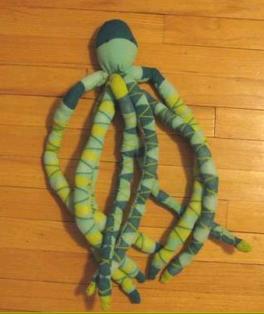
Instructables user ShesParticular shares a tutorial for making a sock-ta-pus, an octapus softie from old socks. Get the how-to.
[photo from Instructables]
Technorati Tags: sewing, tutorial, octapus, squid, softie, sock, sock-ta-pus
Independent craft blog since 2007
by Anne Weaver
Instructables user ShesParticular shares a tutorial for making a sock-ta-pus, an octapus softie from old socks. Get the how-to.
[photo from Instructables]
Technorati Tags: sewing, tutorial, octapus, squid, softie, sock, sock-ta-pus
There is something wonderfully satisfying about crocheting a spider web. You begin with what looks like a rather innocent little circle of yarn and, a few rounds of chains and stitches later, you’ve created something that looks as though it belongs draped across an old haunted house window.
And unlike the real spider webs I seem to discover in corners approximately five minutes after I’ve finished cleaning, these are webs I’m actually happy to have around the house.
Spider web crochet patterns are particularly lovely for Halloween because they can be as subtle or as theatrical as you want them to be. Crochet one little white spiderweb appliqué and stitch it onto a bag, make several small webs for Halloween bunting, or go all out with a dramatic black spiderweb shawl or poncho.
I also love that crochet spider web patterns tend to look far more complicated than they really are. Much of that beautiful open structure comes from chains, chain spaces and taller crochet stitches. Once you understand how the web expands, the pattern often develops into a wonderfully repetitive project.
For this collection I’ve gathered 15 spider web crochet patterns, including plenty of free crochet spider web patterns, Halloween decorations, vintage crochet lace, wearable spiderweb crochet patterns, bags and some wonderfully gothic pieces that certainly don’t need to disappear the minute Halloween is over.
If spiders themselves are more your thing, you may also enjoy our earlier CraftGossip collection of 14 Spider Themed Halloween Crochet Patterns.
Start with our own free crochet spider web pattern, designed as an easy Halloween decoration for beginners. It’s a simple, approachable project that works beautifully as a window decoration, wall hanging, Halloween mantel accent or party backdrop, and it’s a great choice if you want that classic cobweb look without tackling anything too complicated.
This is a lovely place to begin if you’ve never crocheted a web before. The free pattern uses lots of chains to create that open cobweb appearance, and you can simply keep extending the design if you want a bigger web for a window or wall. It would also be brilliant for making several matching webs for a Halloween mantel display.
This free spiderweb is made with worsted-weight yarn and has eight lovely web sections radiating from the centre. Cotton is suggested because it holds the finished shape particularly well, which makes this one a good candidate for hanging in a window or stretching across part of a Halloween wreath.
Designed by Twinkie Chan, this free tutorial gives you both full-web and half-web possibilities, and I particularly like that idea for decorating corners and mantels. Experiment with fine thread for delicate cobwebs or thicker yarn when you want the web to really stand out as part of your Halloween decorating.
Sometimes you don’t need an enormous web—you need a tiny one that can be sewn onto absolutely everything. This little crochet spider web appliqué is approximately two inches across when worked in crochet cotton, making it perfect for cards, treat bags, hats, garlands and Halloween clothing.
This beginner-friendly spider web crochet pattern is another very adaptable design. Make one large web for a wall hanging or create several smaller versions for windows, tables or a Halloween party backdrop. The free pattern can also be downloaded as a PDF, which is handy if you prefer working from printed instructions rather than balancing your phone beside the yarn bowl.
This is where spider web crochet gets particularly fun. Open crochet naturally creates that webbed appearance, which means the motif translates surprisingly well into shawls, scarves and clothing.
This is one of my favourites for anyone wanting a Halloween project they’ll actually wear. The open spiderweb forms a triangular bandana/head scarf, and the pattern includes instructions for adjusting the size as well as a video tutorial. Make it in black for gothic Halloween style, white for cobwebs or go completely off-script with purple, rust or green.
A dramatic shawl doesn’t necessarily have to mean weeks of work. This free Ravelry pattern uses lace or similarly lightweight yarn with a generously sized hook to create a very open, floating spiderweb effect, and the finished size is customisable. This would be fabulous over a simple black dress when you want a Halloween outfit without wearing an actual costume.
Part shawl, part cowl and part wonderfully odd crochet statement piece, this wearable web has long fringe hanging beneath the open web structure. The neck opening can be adjusted, so there’s room to customise the fit. It’s just quirky enough to work for Halloween but stylish enough for anyone who happily wanders into the gothic side of crochet throughout the year.
This is a completely different interpretation of the spiderweb idea. Rather than creating a literal circular web, the cardigan uses an airy spiderweb crochet stitch pattern to make a loose-fitting lacy garment. The design originally appeared in Interweave Crochet and includes several bust sizes, so it’s a nice option if you want spiderweb crochet without making something obviously Halloween themed.
If you want your spiderweb crochet to make an entrance, a poncho is difficult to beat. This made-to-measure adult design uses the open web structure across the garment and is aimed at intermediate crocheters or confident advanced beginners. I’d be tempted by charcoal rather than pure black so all that beautiful stitch work is easier to see.
A spiderweb skirt is certainly not the quiet option—and that is exactly why I’ve included it. This downloadable crochet pattern is designed to be adjustable across sizes and creates a bold webbed garment that would be wonderful for Halloween parties, festivals or anyone whose wardrobe comfortably sits somewhere between crochet and gothic fashion.
One of the cleverest ways to use a crochet web is as a layer over another crocheted surface. You still get the dramatic lines of the web, but the finished project can actually be used rather than simply hung on the wall.
This beginner-friendly bag turns spiderweb crochet into something surprisingly practical. The pattern uses contrasting colours so the web really pops against the bag beneath it, and there are written, chart and tutorial elements to help with construction. It’s the sort of Halloween accessory teenagers might actually agree to carry—which is saying something.
Here the crocheted spiderweb is worked separately and then incorporated into the front of the purse. The finished bag is around six inches wide before the handle is added, so it would make a fun little Halloween handbag or even a trick-or-treat bag for an older child who has outgrown the plastic pumpkin bucket.
I always appreciate a seasonal crochet project that earns its cupboard space for more than one evening. This free round trivet uses the spiderweb idea to create a Halloween-inspired piece for the table or kitchen, measuring around ten inches wide without its handle. Make a couple and you’ve got instant handmade Halloween table décor.
Now this is where spiderweb crochet really shows its roots in traditional lace crochet. This vintage doily pattern was originally published in Star #124, Doilies and uses fine crochet cotton to produce a beautifully intricate circular web design. Make it in traditional white and it looks elegantly vintage; work it in black and suddenly Grandma’s doily has wandered straight into a Victorian haunted house.
You can dramatically change the personality of the same spider web crochet pattern just by changing the yarn.
Crochet thread or fine cotton creates delicate, realistic-looking cobwebs and works particularly well for appliqués, doilies and window decorations.
DK and worsted-weight yarn makes the web much more visible and is easier to work with if you’re a beginner. It’s a good choice for hanging decorations, bags and Halloween accessories.
Black yarn gives you the classic gothic spiderweb, but don’t overlook white, cream, charcoal, purple and grey. Metallic yarn can be fun too, particularly when you’re making smaller Halloween decorations.
And if you’re crocheting a web purely for decoration, don’t be afraid to experiment with a hook slightly larger than you’d normally pair with the yarn. The extra openness can make those web spaces beautifully dramatic.
This is one of those occasions where blocking can make the difference between lovely handmade spiderweb and slightly confused crochet fishing net.
Once your web is finished, gently shape it so that the spokes radiate evenly from the centre and the outer chains are stretched into position. Several of these designs specifically rely on blocking to open and define the finished web structure.
For hanging decorations you can also stiffen the finished crochet slightly if needed. Just keep decorative yarn webs, like any textile decoration, safely away from candles and other open flames—I use battery-operated candles around yarn decorations.
Once you’ve made one, you’ll start noticing places where another web could go. Small ones make fabulous Halloween bunting. Larger webs can be stretched inside embroidery hoops, attached to wreath frames or hung across windows. Tiny versions work as appliqués on tote bags and sweaters, while a collection of different-sized white webs looks wonderful layered across a dark Halloween mantel.
You can also change the entire feel simply by changing colour. Black and purple feel gothic, orange and black scream Halloween, while white or natural cotton can turn the same spiderweb motif into something that looks almost like vintage lace.
And of course, you can always crochet a tiny spider to sit in the middle.
Because after spending an afternoon carefully crocheting the perfect web, it seems only polite to give someone the job of living in it.