• Home
  • Suggest A DIY
  • DIY Newsletter

Craft Gossip

Independent craft blog since 2007

  • About CraftGossip
  • Our Network
    • Bath & Body Crafts
    • Candle Making Ideas
    • Crochet Ideas
    • Cross Stitch
    • Edible Crafts
    • Felting Patterns
    • Glass Art
    • Home & Garden Ideas
    • Indie Crafts
    • Jewelry Making
    • Kids Crafts
    • Knitting Patterns
    • Lesson Plans
    • Needlework
    • Party Ideas
    • Polymer Clay
    • Quilting Ideas
    • Recycled Crafts
    • Scrapbooking
    • Sewing Patterns
    • Card Making
    • DIY Weddings
    • Not Craft Ideas
  • Giveaways
  • Roundups
  • Store
  • Search

Tips for Grout Issues from CMA

May 14, 2011 by Cathi Milligan

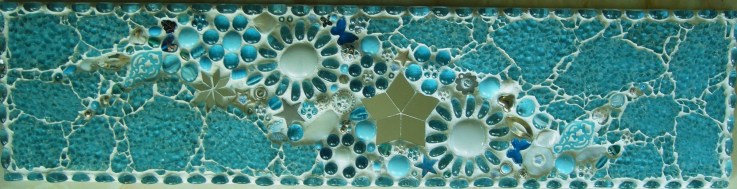
This was in an email sent to members of CMA (Contemporary Mosaic Art) website…

A message to all members of CMA

CMA Member News Reporter

Submitted by Tricia Huffman

May 14, 2011

Grouting Continued..

Since this is the finishing touch to your hard work, I am expanding on the issue of grout issues from last report to address some questions that came to me as a result.
I went to the experts whom manufacture these products, with my questions about it; here is what they said. “Over mixing or adding too much water to the mix would indeed weaken the strength of the grout joint and cause pin-holes and possibly efflorescence. If mixed according to manufacture instructions, adding more dry grout would not be needed. ( Though some artists use this technique when water supplies are limited, and have claimed great success with it.)
As far as using pigment to over-colour cured, unsealed ,non-epoxy grout joints, he indicated that using dry (French) pigments mixed with a tiny amount of water would indeed be permanent, and would have the same effect as grout stains currently on the market .
The last issue to address this month would be efflorescence, which is a white, chalky haze that sometimes appears on grout after it has cured. Here is a list of some of the causes.
1. Too Much Water was used when grout was mixed.

2. Concrete substrate had not fully cured or had a moisture vapor issue prior to adhering mosaic.

3. Water used in mixing or cleaning the grout was high in chlorine or had a high mineral content.( Pond water or home water softeners and city water that is heavily chlorinated or has a high mineral content can contribute to efflorescence.)

4   Temperatures were too cold while grout was curing.

5. Grout joints were wiped excessively during initial cleanup.

6. Standing water was left in empty grout joints prior to
grouting.

7 Tile was especially dense and nonporous.

8 Grout was prematurely exposed to heavy amounts of water before it had a chance to cure.

Always consult manufacture instructions for your particular needs.

«
»

Have you read?

Learn about French Guiana for Kids

French Guiana is actually not an independent country; it’s an overseas department that’s considered a region of France. It’s also known by its French name, Guyane, but since it is situated within South America as if it were a country, let’s take a closer look at French Guiana. 

French Guiana Basics

French Guiana borders Suriname and Brazil, as well as the Atlantic Ocean. 

It is the second largest region of France and about one seventh the size of European France. It has an area of 32,000 square miles, of 84,000 square kilometers. The population is not quite 300,000 people. 

Most of the population lives in the capital and largest city, Cayenne. 

Almost 99 percent of the country is covered by forest, and 41 percent of the country is a national park. 

French Guiana has been fully a part of the French Republic since 1946. As part of the European Union, it uses the Euro. It’s official language is French but French Guianese Creole and other regional languages are also recognized. 

It originally was inhabited by a variety of Indigenous people before the French founded Cayenne in 1643. It was a center of slavery until the French Revolution, when slavery was abolished in the overseas colonies. 

The government is made up of a prefect and a legislative assembly. 

French Guiana Symbols

Because it’s not a country French Guiana doesn’t have national symbols, but it does have an unofficial flag, which has a diagonal division down the center with green on the right side and yellow on the left. A red five-pointed star sits at the center. The flag was designed in 1967 by the Guyana Agricultural and General Workers’ Union. Officially the French flag is also the flag used in French Guiana. 

Likewise the unofficial regional anthem is “Le Chant du départ,” or “The Song of Departure,” which is a song from the French Revolution that is also the official presidential anthem in France. It was first performed in 1794 and was the national anthem of the First French Empire. 

The coat of arms of French Guiana features a crest showing a boat full of gold on a green river, topped with a set of three fluers de lis and the date 1643. Above the shield is a castle (or maybe a fort?) and palm trees, and a banner with words in Latin that translate to “work creates abundance.” There are also anteaters on either side of the crest.

There are many creatures that live in the Amazon rain forest that might be considered regional symbols, including the jaguar, harpy eagle and leatherback sea turtle. Among the endemic species are the Guianan cock-of-the-rock, red-faced spider monkey, Guianan red howler monkey and dyeing poison dart frog. 

French Guiana Learning Activities for Kids

Because most of French Guiana is rain forest, focusing on the animals and life of the forest is a great way to learn about French Guiana. Check out this post on A-Z Animals for more about some of the animals that live in the area. You can also learn more about the Guiana Amazonian Park (the site is in French but there are great photos, and you can translate it if you need to).

Learn more about Cayenne, French Guiana and check out this video from Jumps Travel Documentary for more on the culture in Cayenne. 

Lost in Context has another good video about the history of French Guiana and what it has to do with the space industry. 

Find some French Guiana printables and learning activities at Teachers Pay Teachers. 

A common dish is awara broth, or bouillon d’awara, which is made from the past of a palm tree, along with smoked meats and vegetables like cabbage and eggplant. French Guiana calou, made with shrimp or smoked meat and spinach, is another common dish that can be found throughout the Caribbean as well as in French Guiana. I didn’t find a good recipe but here’s a video showing a little about it from TikTok (or here’s a version from YouTube that includes pig tail, roast beef and a smoked turkey leg).

Free Printables –  Right click and save or print or French_Guiana_A4_Printable_Coloring_Activity_Sheets

RSS More Articles

  • How To Sew A Shirt Collar With A Collar Stand: A Step-By-Step Guide For Neater Shirtmaking
  • Learn about French Guiana for Kids
  • Crochet Rakhi Bracelets You Can Make, Gift, Or Buy Handmade
  • Book Review: Shadow Knitting by Vivian Høxbro
  • 10 Clever Ways To Upcycle An Odd Sock
  • Free Crochet Pattern: Evil Eye Rakhi Bracelet
  • Floret Farm’s Cut Flower Garden Review: A Dreamy Flower Book for Gardeners, Growers, and Bouquet Lovers
  • 12 Handmade Card Ideas with Bees
  • Beach Bag Knitting Patterns
  • Mary Poppins Eyelet Tote Bag – Free Sewing Pattern

Pick Your Blog

  • Sewing
  • Knitting
  • Quilting
  • Crochet
  • Home & Garden
  • Recycled Crafts
  • Scrapbooking
  • Card Making
  • Polymer Clay
  • Cross-Stitch
  • Edible Crafts
  • Felting
  • Glass Art
  • Indie Crafts
  • Kids Crafts
  • Jewelry Making
  • Lesson Plans
  • Needlework
  • Bath & Body
  • Party Ideas
  • Candle Making
  • DIY Weddings
  • Not Craft
  • Free Craft Projects

Copyright © 2026 · CraftGossip | Start Here | Contact Us | Link to Us | Your Editors | Privacy and affiliate policy