
• Home
  • Suggest A DIY
  • DIY Newsletter

Craft Gossip

Independent craft blog since 2007

  • About CraftGossip
  • Our Network
    • Bath & Body Crafts
    • Candle Making Ideas
    • Crochet Ideas
    • Cross Stitch
    • Edible Crafts
    • Felting Patterns
    • Glass Art
    • Home & Garden Ideas
    • Indie Crafts
    • Jewelry Making
    • Kids Crafts
    • Knitting Patterns
    • Lesson Plans
    • Needlework
    • Party Ideas
    • Polymer Clay
    • Quilting Ideas
    • Recycled Crafts
    • Scrapbooking
    • Sewing Patterns
    • Card Making
    • DIY Weddings
    • Not Craft Ideas
  • Giveaways
  • Roundups
  • Store
  • Search

Stitch Spring Flowers on This Pretty Cowl

April 28, 2023 by Sarah White

The storytelling that often accompanies recipe blog posts has become a bit of a joke on the Internet, with people who just want the recipe already complaining about the fact that the author tells the whole back story of the dish, their family’s reaction, the history of the herb cilantro, before they share the ingredients.

Of course the reason many people write posts like that is because the algorithms tend to prefer longer posts, and you can get more keywords into a post that has more words in general.

As a blogger I don’t mind the storytelling much, and while this trend isn’t found in knitting patterns as much as it is in recipes, sometimes it’s nice to get the backstory on a meal, or, in this case, a knitting pattern.

I think it’s worth reading the story that comes before the pattern on this one. The Orwell’s Garden cowl by Julie Cameron Gray is lovely by itself — a sock yarn cowl worked in the round, covered with dainty flowers. 

But the story behind the cowl gives it a deeper meaning and give us something to think about while we’re knitting. It’s about creating things that last, through the lens of gardening, but knitting is similar in that we make things and we don’t know who might enjoy them in the future, what might happen to them when we’re gone.

And if you’re not into the deep introspection right now, you can just scroll through like you do on those recipe posts.

The cowl uses four colors and the colorwork is presented in a chart. It’s not difficult if you know how to read a chart, but it might be more efficient to do the yellow stitches at the center of each flower in duplicate stitch (or even as a French knot to add some texture) rather than knitting a single stitch of that color in each flower. Grab the free pattern from Taddle Creek.

[Photo: Guy Crawford.]
«
»

Have you read?

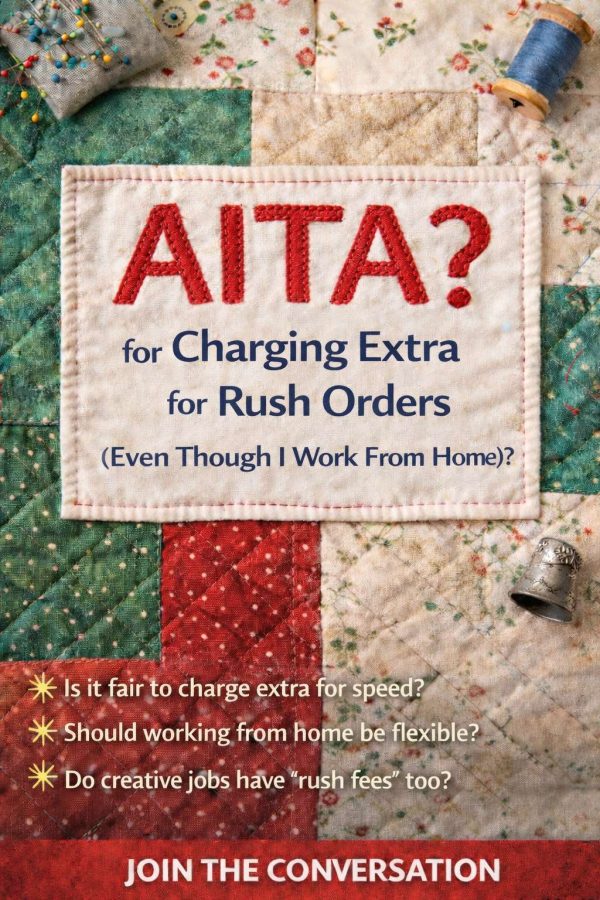
AITA for Charging Extra for Rush Orders (Even Though I Work From Home)

Dear Crafty Readers,

“I run my sewing business from home. I don’t have a shopfront. I don’t clock in and out. I just sew in my own space, around my own schedule.

And because of that, people assume I’m endlessly flexible.

When someone needs something urgently, they’ll ask if I can ‘just squeeze it in.’ They’ll message late at night. They’ll explain how important the deadline is to them.

I started charging a rush fee.

And that’s when the pushback began.

‘But you’re already home.’
‘It shouldn’t cost more if you’re not travelling anywhere.’
‘Can’t you just do it this once?’

A few people have acted genuinely offended — like I’m being greedy or unreasonable.

Now I’m second-guessing myself.

Am I the asshole for charging extra for rush orders, even though I work from home?

— Anonymous

If you’ve ever felt awkward adding a rush fee — or tempted to waive it just to avoid tension — you’re not alone.

This question cuts right to the heart of how creative, home-based work is still misunderstood.

Why “Working From Home” Changes How People Treat You

There’s a strange assumption that if you work from home, your time is somehow more flexible — or less valuable.

People often think:

  • You’re already there

  • You can just reshuffle things

  • You’re not “really” inconvenienced

What they don’t see is that home-based work still has:

  • Schedules

  • Commitments

  • Limits

  • Personal time

Being at home doesn’t mean being on call.

What a Rush Order Actually Costs You

A rush order isn’t just about sewing faster.

It often means:

  • Dropping other work

  • Rearranging personal plans

  • Sewing late into the evening

  • Working under pressure

  • Carrying someone else’s urgency

That urgency has a cost — even if it doesn’t show up on a receipt.

“But It’s Just One Item…”

This phrase is another familiar one.

A rush order is rarely just one item. It’s the mental load that comes with:

  • Watching the clock

  • Worrying about deadlines

  • Rushing decisions

  • Feeling responsible for someone else’s timing mistake

That pressure deserves compensation — not guilt.

Why Rush Fees Feel Uncomfortable to Charge

Many sewists hesitate to add rush fees because:

  • They don’t want to seem difficult

  • They fear losing the sale

  • They worry about appearing greedy

But a rush fee isn’t a punishment. It’s a boundary.

It tells customers: This is possible, but it costs more because it costs me more.

The Double Standard Around Creative Work

Interestingly, rush fees are widely accepted in other industries.

People expect to pay more for:

  • Express shipping

  • Same-day services

  • Last-minute bookings

But when it comes to handmade or creative work, that logic often disappears — especially when the work happens at home.

That double standard puts unnecessary pressure on makers.

When Waiving Rush Fees Backfires

Many sellers learn this the hard way.

When you don’t charge extra for urgency:

  • Rush orders become expected

  • Boundaries blur quickly

  • Stress increases

  • Resentment builds

What starts as flexibility can quietly turn into burnout.

Is Charging Extra Unfair — or Honest?

This is where opinions really split.

Some readers will say:

  • “A rush fee is completely reasonable.”

Others might argue:

  • “If you can do it, why charge more?”

And a few will admit:

  • “I never thought about the impact of urgency.”

All of those perspectives exist — and they’re worth hearing.

So… Are They the Asshole?

There’s no universal answer here.

But there is an important question underneath it all:

Should working from home mean giving up control over your time?

For many sewists, the answer is a firm no.

Over to You, Crafty Readers 

Now it’s your turn — and this one tends to spark strong opinions.

  • Do you charge rush fees?

  • Have you ever felt guilty enforcing them?

  • As a buyer, would you expect to pay more for urgency?

  • Or do you think rush fees are unnecessary?

 Scroll down and join the discussion.
This is one of those topics where lived experience really matters.

(And if you’ve got a sewing dilemma of your own, you can submit it anonymously to Sewing.CraftGossip — sometimes the hardest part is asking the question.)


RSS More Articles

  • AITA for Charging Extra for Rush Orders (Even Though I Work From Home)
  • Cross Stitch a Job and Get a Jump on Holiday Crafting
  • Book Review: Unauthorized Ultimate K-Pop Fanbook – Girl Group Edition
  • Flavoured Ice Cubes for Whiskey Lovers
  • Dollar Tree Strainer Pumpkin Tutorial
  • FREE Dragonfly Die Cut Card Download
  • DIY Review: Vintage Milk Can Side Table Makeover – Upcycled Charm with a Story
  • Book Review: Simple Sashiko – 20 Easy Projects to Create & Inspire
  • Book Review Wednesday: 3D Beaded Animal Crafts for Kids
  • Easy Lacing Cards to Make for Kids

Pick Your Blog

  • Sewing
  • Knitting
  • Quilting
  • Crochet
  • Home & Garden
  • Recycled Crafts
  • Scrapbooking
  • Card Making
  • Polymer Clay
  • Cross-Stitch
  • Edible Crafts
  • Felting
  • Glass Art
  • Indie Crafts
  • Kids Crafts
  • Jewelry Making
  • Lesson Plans
  • Needlework
  • Bath & Body
  • Party Ideas
  • Candle Making
  • DIY Weddings
  • Not Craft
  • Free Craft Projects

Copyright © 2026 · CraftGossip | Start Here | Contact Us | Link to Us | Your Editors | Privacy and affiliate policy