
image by Tim Holtz and Allie Edwards
Allie Edwards welcomes a special guest on her blog, Tim Holtz, he’s shares step by step instructions for making some amazing projects using photos, stamping, capsules and more, really stunning stuff!
-Heather
Independent craft blog since 2007
image by Tim Holtz and Allie Edwards
Allie Edwards welcomes a special guest on her blog, Tim Holtz, he’s shares step by step instructions for making some amazing projects using photos, stamping, capsules and more, really stunning stuff!
-Heather
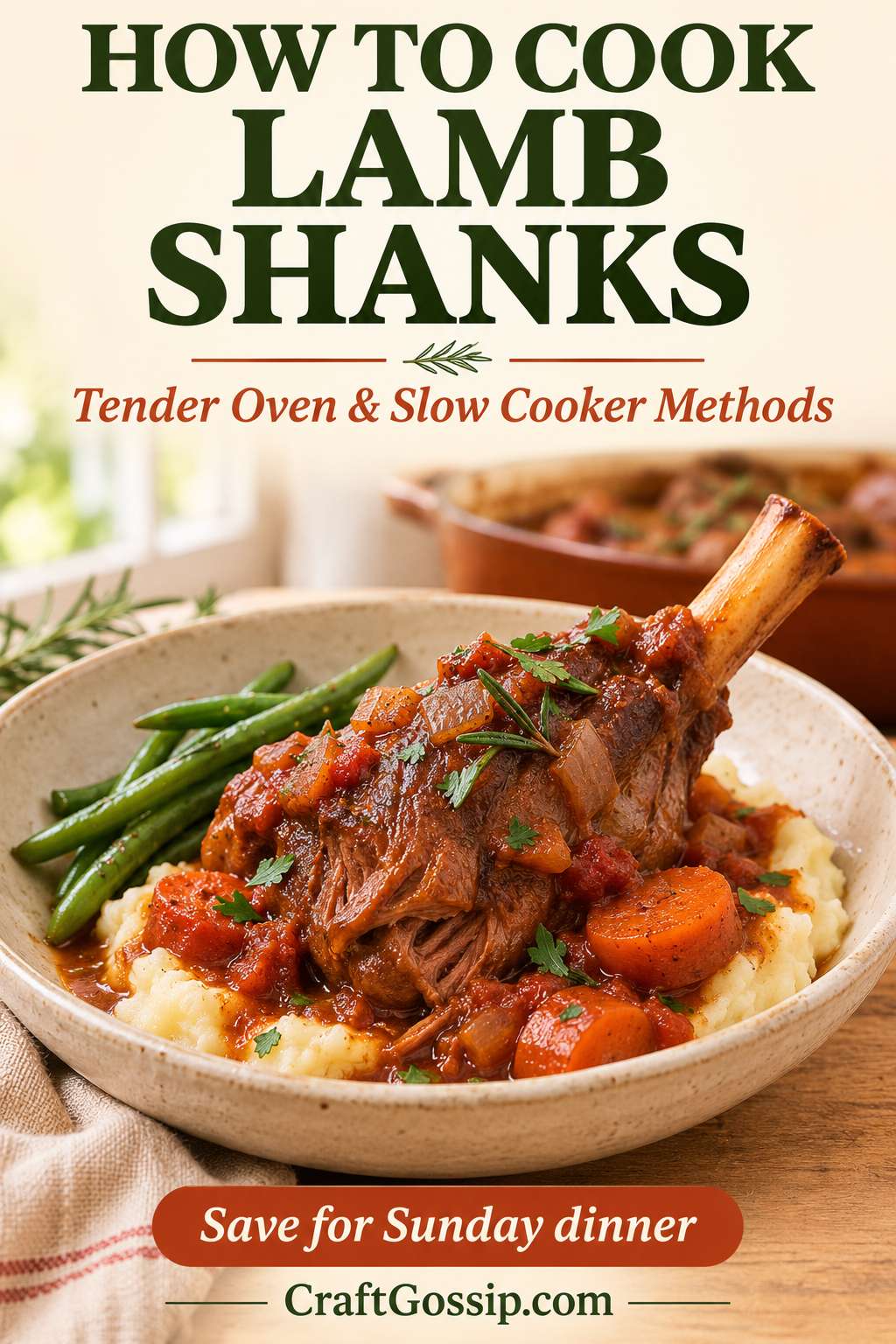
The best way to cook lamb shanks is to brown them, then cook them slowly in a covered pot with stock, vegetables and herbs until fork-tender. Allow roughly 3 to 4 hours in a 160°C conventional oven, or 8 to 9 hours on low in a slow cooker. Size matters, so check the meat rather than relying on the clock alone.
Lamb shanks look like the sort of dinner you order when someone else is doing the washing up. A generous spoonful of mash, rich gravy and meat that slips away from the bone makes a very convincing restaurant meal.
At home, the process is surprisingly manageable. There is a little browning and chopping, then a long, gentle cook. No complicated carving, no last-minute juggling of three frying pans.
This guide explains how to cook lamb shanks in the oven, slow cooker or on the stove, with a rosemary and tomato recipe that needs no wine. There is also a red wine variation if that is the flavour you fancy.
Lamb shanks come from the lower leg, a hardworking part of the animal with plenty of connective tissue. A quick cook leaves that tissue chewy. Long cooking with moisture helps it soften into the tender texture we want.
Think of this as a braise: the meat sits partly in liquid inside a covered pot. The aim is gentle cooking, rather than a fierce boil or an uncovered roast.
Buy similar-sized shanks so they finish at roughly the same time. Allow one per adult for a generous main course, remembering that some of the weight is bone.
Use these as starting ranges for fully thawed shanks weighing about 350 to 450g each. They are cooking times, excluding browning and sauce finishing.
| Method | Setting | Approximate cooking time |
|---|---|---|
| Oven, tightly covered | 160°C conventional / 140°C fan / 320°F | 3 to 4 hours; start checking at 2½ hours |
| Slow cooker | Low | 8 to 9 hours |
| Slow cooker | High | 4 to 5 hours |
| Stovetop, covered | Bare simmer | 2½ to 3½ hours |
Larger shanks may take longer. The lamb is ready when a fork enters the thickest meat easily and a gentle twist separates it into soft pieces. For a neat plated serving, stop while the meat still holds loosely to the bone.
This no-wine lamb shank recipe makes a chunky sauce with everyday vegetables. A little balsamic vinegar adds brightness at the end, while lemon zest and parsley are optional finishing touches.
Serves: 4
Prep: About 20 minutes
Cooking: About 3½ to 4½ hours, including browning and finishing
Equipment: A large, ovenproof casserole with a tight-fitting lid, usually about 6 to 7 litres. Check that your shanks fit before starting.
Preheat the oven to 160°C conventional or 140°C fan.
Pat the lamb dry with kitchen paper and season with the salt and pepper. Trim loose, thick pieces of external fat if needed. There is no need to remove every bit of connective tissue or make the bones look restaurant-perfect.
Heat the oil in your casserole over medium-high heat. Brown two shanks at a time, turning with tongs to colour the meaty surfaces. Allow about 8 to 10 minutes per batch, adjusting the heat if the pot begins to scorch.
Transfer to a plate. Spoon off excess rendered fat, leaving about a tablespoon in the pot.
An awkwardly shaped shank will never sit flat on every side. Aim for good colour where you can, rather than wrestling it into submission.
Reduce the heat to medium. Add the onions and carrots and cook for 8 to 10 minutes, stirring occasionally. Add a little oil if the pot is dry.
Stir in the garlic for 30 seconds, then add the tomato paste and paprika. Cook for another minute, stirring so the spices do not burn.
Pour in a little of the stock and scrape up the browned cooking juices. Add the remaining stock, tomatoes, rosemary and bay leaf.
Return the lamb and any juices from the plate. Nestle the shanks into the vegetables. The liquid should reach roughly halfway to two-thirds up the meaty portions. Add hot water if needed, or use a snugger pot if the shanks are sitting in a very shallow puddle.
Bring to a gentle simmer, then cover tightly.
Transfer the covered pot to the oven. Begin checking after 2½ hours, turning the shanks carefully and checking the liquid level. Add a splash of hot water if the sauce is getting thick before the meat is tender.
Continue cooking, checking every 30 minutes, until a fork slides easily into the meat. Expect around 3 to 4 hours overall, depending on the shanks and your oven.
If the meat is still resistant but moist, replace the lid and give it more time. Turning up the heat is rarely the helpful shortcut we hope it will be.
Lift the tender shanks onto a warm platter and cover loosely. Remove the rosemary stems and bay leaf, then skim visible fat from the sauce.
If the sauce is thin, simmer it uncovered on the stove for 10 to 15 minutes, stirring occasionally. If it is too thick, add a little hot water.
Stir in 1 teaspoon balsamic vinegar, taste, and add the second teaspoon only if needed. Adjust the salt and pepper after reducing the sauce.
Serve the lamb with plenty of sauce and, if using, parsley and a little lemon zest.
Brown the lamb and cook the vegetables as above. For the slow cooker version, reduce the stock to 400ml, keeping the tin of tomatoes and other ingredients the same. Slow cookers lose much less moisture than an oven casserole.
Deglaze the pan with some of that measured stock, then transfer everything to a slow cooker large enough to hold the shanks comfortably. Follow your appliance’s minimum and maximum filling guidance.
Cover and cook for 8 to 9 hours on low or 4 to 5 hours on high, until fork-tender. Avoid repeatedly lifting the lid.
Remove the cooked shanks and finish the sauce in a saucepan on the stove. Add the balsamic vinegar after reducing. Do not put a ceramic slow cooker insert on a burner unless its manufacturer specifically allows it.
Yes. Follow the main recipe through to adding the liquid, then keep the tightly covered casserole over the lowest heat that maintains a bare simmer.
Allow approximately 2½ to 3½ hours, turning the shanks occasionally. Check the bottom of the pot and liquid level regularly, because direct heat can catch the sauce. Add hot water as needed and cook until tender.
For the oven recipe, replace 250ml of the stock with 250ml dry red wine. After cooking the tomato paste and paprika, add the wine and simmer for 3 to 5 minutes before adding the remaining 500ml stock and other braising ingredients.
Taste before adding the finishing vinegar, as you may not need it. Cooking with wine does not guarantee an alcohol-free meal, so use the no-wine version when alcohol must be avoided.
If you enjoy this flavour combination, our recipes to cook using red wine include more ideas for hearty dinners and desserts.
Firm, chewy meat usually needs longer cooking. Check that there is still enough liquid, cover the pot and continue gently in 30-minute intervals.
Dry, stringy meat needs a different response. It may have cooked too fiercely, lost too much moisture or been left long beyond tenderness. Shred it into the sauce rather than continuing to cook it indefinitely.
A watery sauce does not mean the lamb needs longer. Remove tender meat first, then reduce the sauce separately.
A salty sauce needs dilution. Add a little water or unsalted stock and avoid reducing it further. Reduced-salt stock gives you more control from the beginning.
Creamy mashed potato is an obvious favourite because it catches all that sauce. Soft polenta, butter beans or mashed sweet potato work well too.
Add steamed green beans, peas or broccoli for something fresh alongside the rich meat. For more choices, our side dishes to go with stew include breads, vegetables and potato dishes that also suit a saucy lamb dinner.
To stretch leftovers, remove the bones and serve the shredded lamb and sauce over baked potatoes or through pasta. If you are planning another warming lamb meal, have a look at our one-pot lamb and chickpea curry feature.
Divide the lamb and sauce into shallow containers for faster cooling and refrigerate within two hours. Keep the fridge below 5°C and eat refrigerated leftovers within three days.
Alternatively, freeze portions with their sauce for up to three months. Thaw in the fridge and use within 24 hours of defrosting, following the NSW Food Authority’s leftover-storage advice.
Reheat only the portion you need in a covered saucepan with a splash of water, turning gently until steaming hot throughout. Aim for at least 75°C in the centre, checking the thickest meat away from the bone with a clean food thermometer.
If making the dish a day ahead, lift off the firm layer of fat from the chilled sauce before reheating. It is much easier than chasing little pools of fat around a hot casserole.
No. For the oven recipe, halfway to two-thirds up the meaty portions is enough when the lid fits tightly. Turn them during cooking and replace lost liquid as needed.
Yes, but browning adds colour and a deeper savoury flavour. It is a worthwhile step when you have time.
Yes. They are forgiving, but very prolonged cooking can leave the meat stringy or cause it to fall apart completely. Stop when the texture suits the way you want to serve it.
Yes. Brown the meat and prepare the sauce in a separate pan, then transfer to a deep ovenproof dish. Cover tightly with an oven-safe lid or a double layer of foil. A wide dish may need more liquid, so check during cooking.
For these instructions, thaw them fully in the fridge first. Frozen meat changes cooking times and is unsuitable for this slow cooker method.
Once you understand the gentle heat, covered pot and tenderness check, lamb shanks become a very approachable dinner. Put the mash on near the end, warm the plates and give that lovely sauce somewhere to go.