• Home
  • Suggest A DIY
  • DIY Newsletter

Craft Gossip

Independent craft blog since 2007

  • About CraftGossip
  • Our Network
    • Bath & Body Crafts
    • Candle Making Ideas
    • Crochet Ideas
    • Cross Stitch
    • Edible Crafts
    • Felting Patterns
    • Glass Art
    • Home & Garden Ideas
    • Indie Crafts
    • Jewelry Making
    • Kids Crafts
    • Knitting Patterns
    • Lesson Plans
    • Needlework
    • Party Ideas
    • Polymer Clay
    • Quilting Ideas
    • Recycled Crafts
    • Scrapbooking
    • Sewing Patterns
    • Card Making
    • DIY Weddings
    • Not Craft Ideas
  • Giveaways
  • Roundups
  • Store
  • Search

I Want, I Want, I Want…

September 11, 2009 by Terrye

It’s not my birthday. It’s nowhere close to my anniversary. The best I can hope for is Christmas.

This is what I want, I might even trade my next few breaths for it:
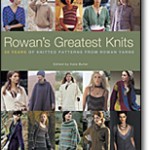
rowan30 years of great patterns. 30 years of their most popular designs, and 80 photographs!

Rowan — a name synonymous with quality. Originating in England in 1980, Rowan has achieved world-class status for its fine knitting yarns as well as its knitting publications and classic fashion patterns.

A 30-year retrospective. Rowan’s Greatest Knits brings you 30 of its most popular knitwear patterns from the 80s through today — all in one big, beautiful book. Here, you’ll also be treated to 80 stunning color photographs from the original pages of Rowan magazine.

Classic knit patterns. With clearly written instructions, knitters of all skill levels can reproduce these enduringly beautiful patterns for knitted sweaters, vests, scarves, mittens and socks. Patterns include helpful yarn replacement suggestions.

Inspiration from top designers. Some of today’s leading designers have partnered with Rowan to produce outstanding knitwear. Kaffe Fassett, known for his brilliant designs and use of vibrant color, wrote the introduction to this book. And the works of Jean Moss, Sasha Kagan, and Annabel Fox, among others, are also featured.

This book is truly a “keeper”. It’s perfect for anyone who loves to knit and enjoys creating classic fashions with style.

<swoon…> I knew you’d want it too. Here’s the link to get your own directly from Taunton Press: http://store.taunton.com/onlinestore/item/rowans-greatest-knits-kate-buller-071298.html

Must. Go. Knit!
«
»

Have you read?

What Is Shadow Knitting? A Beginner-Friendly Guide To Illusion Knitting

Shadow knitting is one of those knitting techniques that feels a little bit like magic the first time you see it. From straight on, the project looks like simple stripes. Nice enough, but nothing too dramatic. Then you tilt it, step to the side, or catch it from just the right angle, and suddenly a hidden picture appears.

It is also called illusion knitting, and if you have noticed the phrase shadow knitting popping up more often lately, you are not imagining things. This clever optical illusion knitting technique has been getting fresh attention because it is easy enough for confident beginners, but the finished results look wonderfully impressive.

And the best part? You do not need complicated lace, cables, steeks, or any of the knitting tricks that make you want to quietly put the project in a cupboard and pretend it never happened. Shadow knitting is made with just knit and purl stitches, usually worked in two contrasting colors.

That is it. Knits, purls, stripes, and a little bit of clever chart reading.

What Is Shadow Knitting?

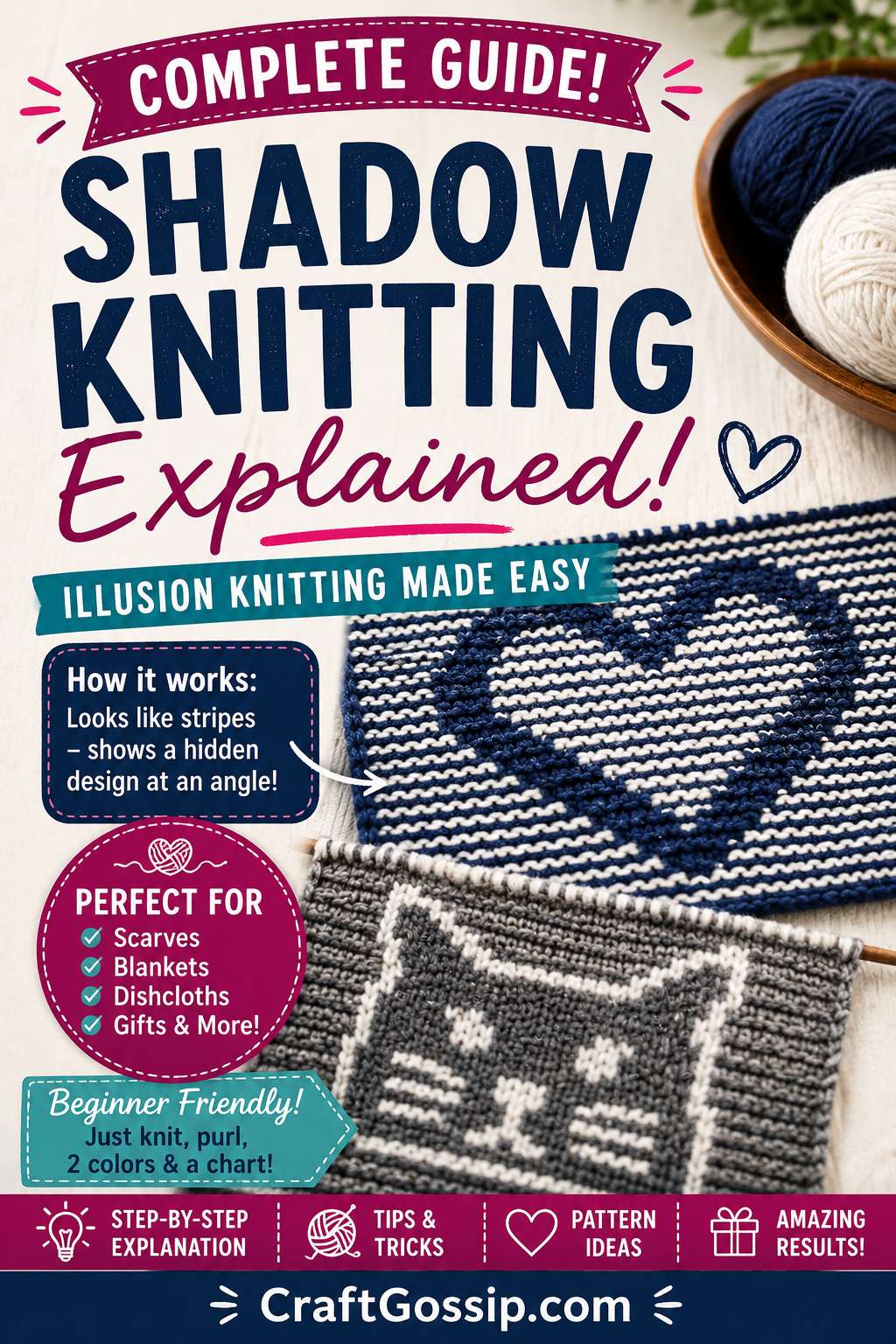
Shadow knitting is a form of textured colorwork where an image is hidden inside rows of stripes. When you look at the knitting straight on, you mostly see horizontal stripes. When you view it from an angle, the raised purl ridges reveal a picture, word, shape, or pattern.

It works because knit stitches and purl stitches sit differently on the fabric. Knit stitches are flatter, while purl stitches create little raised bumps. By changing where the raised purl stitches appear in each color stripe, the design becomes visible from the side.

This is why shadow knitting is also known as illusion knitting. The image is there the whole time, but it only appears when the fabric is viewed from the right direction.

If you have ever seen a knitted scarf that secretly shows a skull, cat, heart, geometric pattern, or message when tilted, there is a good chance it was made using shadow knitting.

Shadow Knitting vs Illusion Knitting

Shadow knitting and illusion knitting are generally the same technique. Some knitters use the words interchangeably, though “illusion knitting” is often used when the hidden image is more detailed or pictorial, while “shadow knitting” sometimes describes simpler geometric designs.

CraftGossip recently shared a lovely example in this illusion knitting baby blanket pattern, which is a great place to see how a simple striped baby blanket can hide a clever design when viewed from the side.

For knitters who want to go deeper into the technique, the classic book Shadow Knitting by Vivian Høxbro is still one of the best-known resources for learning how shadow knitting works. Vivian Høxbro’s approach helped popularise the idea of using alternating rows of light and dark yarn to make patterns that appear and disappear depending on the viewing angle.

How Does Shadow Knitting Work?

Shadow knitting usually uses two highly contrasting colors. Think black and white, navy and cream, charcoal and pale pink, or deep green and soft grey.

The knitting is worked in stripes, usually two rows of one color followed by two rows of the second color. The clever part happens on the wrong-side rows, where you knit or purl certain stitches depending on the chart.

A very basic shadow knitting structure might look like this:

  • Row 1: Knit across with Color A
  • Row 2: Knit and purl according to the chart with Color A
  • Row 3: Knit across with Color B
  • Row 4: Knit and purl according to the chart with Color B

This creates alternating ridges. Some ridges are raised in one color, and some are raised in the other. When viewed from an angle, those raised ridges create the hidden image.

For a very practical beginner breakdown, this Shadow or Illusion Knitting tutorial on Instructables shows the idea step by step and is helpful if you like seeing the process visually before committing yarn to needle.

It sounds more complicated than it feels once you are doing it. Truly, this is one of those techniques where your hands understand it before your brain stops overthinking it.

Why Is Shadow Knitting So Popular?

Shadow knitting is popular because it gives you a big visual payoff without requiring advanced knitting skills.

You can create impressive projects using only:

  • knit stitches
  • purl stitches
  • two colors of yarn
  • a chart
  • basic row counting

That makes it appealing for knitters who want to try something new without learning stranded colorwork, intarsia, lace, or complicated shaping.

It also has that lovely “wait until you see this” factor. A shadow knitting scarf or blanket looks simple at first, then reveals its secret when someone moves past it. It is the knitted version of a cheeky little surprise.

Shadow knitting is especially good for gifts because you can hide initials, symbols, hearts, animals, fandom-inspired shapes, seasonal motifs, or even secret messages inside the fabric.

Best Projects For Shadow Knitting

If you are new to shadow knitting, start with a flat project. This is not the time to begin with a fitted cardigan or anything involving sleeve shaping, unless you enjoy knitting drama as a lifestyle choice.

Good beginner shadow knitting projects include:

  • scarves
  • dishcloths
  • washcloths
  • blankets
  • cushion covers
  • wall hangings
  • table runners
  • baby blankets
  • simple rectangular panels

A scarf is probably the most popular first project because the long, narrow shape gives you plenty of room for words, symbols, or repeating motifs.

Dishcloths are another brilliant way to practise because they are small, quick, and useful. If the first one comes out a little wonky, congratulations, you now have a dishcloth with personality.

If you want a quick rabbit hole of what this technique can become, browse the World of Illusion Knitting patterns on Ravelry. Steve Plummer’s work is especially good for showing just how detailed illusion knitting can become once you move beyond beginner shapes.

Best Yarn For Shadow Knitting

The best yarn for shadow knitting is smooth, even, and not too fuzzy. You want the knit and purl texture to show clearly.

Good yarn choices include:

  • DK yarn
  • worsted weight yarn
  • cotton yarn
  • wool blends
  • acrylic yarn with good stitch definition

Avoid very fuzzy yarns, eyelash yarns, boucle yarns, or highly variegated yarns for your first project. They can hide the texture, and shadow knitting relies on texture doing the heavy lifting.

For beginners, I would choose two solid colors with strong contrast. A light and a dark color will make the hidden image much easier to see.

If you are buying yarn specifically for a shadow knitting project, look for smooth yarn with clear stitch definition. Mary Maxim often has practical yarn options for blankets, scarves, and beginner knitting projects, and Amazon is handy for basic knitting needles, row counters, and locking stitch markers if you are setting yourself up for charted knitting.

Choosing Colors For Shadow Knitting

Color contrast matters more than fancy yarn.

The hidden image appears because one color stands out against the other when the purl ridges are viewed from an angle. If your two colors are too similar, the illusion will be much softer and may be harder to see.

Good color combinations include:

  • black and white
  • navy and cream
  • charcoal and pale grey
  • burgundy and blush
  • forest green and oatmeal
  • chocolate brown and beige
  • deep purple and lavender
  • teal and pale aqua

For a dramatic hidden image, choose one very dark color and one very light color.

For a softer look, choose two related colors with enough contrast to show the design but not so much that the stripes feel harsh. This works nicely for baby blankets, home décor, and cushion covers.

Can Beginners Try Shadow Knitting?

Yes, confident beginners can absolutely try shadow knitting.

You should be comfortable with:

  • casting on
  • knitting
  • purling
  • changing colors at the edge of a row
  • reading a simple chart
  • binding off

You do not need to know stranded colorwork. You are only using one color per row, which makes it much less intimidating than Fair Isle or intarsia.

The part that may feel new is reading the chart. Shadow knitting charts can look a little unusual because one chart row may represent several knitted rows. Once you understand how your pattern is written, the knitting itself is usually very straightforward.

If you want a structured place to explore tutorials and examples, Woolly Thoughts’ illusion knitting page includes tutorials, free patterns, paid patterns and galleries of finished illusion knitting projects.

My advice? Start small. Do not make your first shadow knitting project a king-size blanket with a detailed portrait of your dog, no matter how handsome he is. Begin with a dishcloth, scarf panel, or simple geometric design.

How To Read A Shadow Knitting Chart

Shadow knitting charts vary by designer, so always read the pattern notes carefully before starting.

In many patterns, each chart row represents a group of rows in the knitting. Often, you will work two rows in one color and two rows in the second color.

The right-side rows are often knitted across, creating the striped base.

The wrong-side rows are where the design happens. You knit or purl according to the chart so the raised ridges appear in the right places.

A simple way to think about it is this:

  • knit stitches stay flatter
  • purl stitches create raised ridges
  • raised ridges reveal the image from the side

Most beginner-friendly shadow knitting patterns will tell you exactly which rows to knit, which rows to purl, and how to follow the chart. If a pattern assumes too much, put it aside for later. There are plenty of kinder patterns in the yarn sea.

Why Shadow Knitting Looks Different From Different Angles

Shadow knitting works because of light, texture, and viewing angle.

When you look straight at the fabric, the stripes are the most obvious part. The raised purl ridges are there, but they do not dominate.

When you look from the side, the raised ridges block or reveal different colors. That is when the hidden image appears.

This is also why shadow knitting makes such good wall hangings, scarves, and blankets. These projects are naturally viewed from different angles as people move around them.

If you hang a shadow knitting panel flat on a wall, place it somewhere people can see it from the side. A hallway, stairwell, entryway, or craft room wall can work beautifully.

Common Shadow Knitting Mistakes

Using Colors That Are Too Similar

This is probably the biggest beginner mistake. If there is not enough contrast, the hidden image may barely show.

Choose one light and one dark color for your first project.

Using Fuzzy Yarn

Fuzzy yarn hides stitch texture. Save the fluffy yarn for another project.

Shadow knitting needs clear knit and purl definition.

Losing Track Of Rows

Because shadow knitting relies on repeated rows and chart reading, losing your place can throw off the image.

Use a row counter, sticky note, highlighter tape, or even a good old-fashioned pencil tick mark. No judgement here. We are knitters, not memory machines.

Pulling Color Changes Too Tight

When changing colors at the edge, keep the yarn relaxed. If you pull too tightly, the edges may pucker.

Not Checking The Illusion As You Go

Every so often, hold your knitting at an angle and check that the design is appearing. It is much better to catch a mistake after four rows than after forty.

Shadow Knitting Tips For Better Results

Use smooth yarn with good stitch definition.

Choose two high-contrast colors.

Start with a small project before attempting a large blanket.

Keep your tension even.

Read the full pattern before casting on.

Use stitch markers for repeat sections.

Check the image from an angle every few inches.

Block the finished piece gently so the ridges sit neatly.

Photograph the finished project from the side if you want to show the illusion clearly online.

That last one is especially important if you are sharing your knitting on Pinterest, Etsy, Instagram, or a blog. A straight-on photo may only show stripes, while an angled photo reveals the “wow” moment.

Shadow Knitting Pattern Ideas

Once you understand the basics, shadow knitting can be used for all sorts of fun projects.

Hidden Heart Scarf

A simple scarf with a heart that only appears from the side would make a sweet Valentine’s Day gift, anniversary present, or handmade gift for someone who appreciates subtle details.

Cat Or Dog Illusion Dishcloth

A small animal silhouette is a fun way to practise chart reading without committing to a large project.

Secret Message Blanket

This could be lovely for a baby blanket, wedding gift, or graduation gift. Imagine a blanket that looks striped until you tilt it and see a name, date, or short message.

Halloween Shadow Knitting

Skulls, bats, ghosts, black cats, haunted houses, and pumpkins all work beautifully with the hidden-image effect. A shadow knitting Halloween scarf would be very fun without being too over-the-top.

Christmas Illusion Knitting

Try trees, stars, snowflakes, reindeer, or simple festive words. Shadow knitting would make gorgeous cushion covers or table runners for the holidays.

Geeky And Fandom-Inspired Knits

Shadow knitting is perfect for secret symbols, initials, icons, and motifs. Just be mindful of copyright if you are selling finished items or patterns.

For more advanced inspiration, Steve Plummer’s designer page on Ravelry shows how far the technique can be pushed, from simple motifs to intricate illusion art.

Can You Design Your Own Shadow Knitting Pattern?

Yes, but it takes patience.

Simple shapes are much easier to design than detailed images. Start with bold silhouettes, letters, hearts, stars, stripes, checkerboards, or geometric motifs.

A good beginner design should have:

  • clear outlines
  • strong contrast
  • limited detail
  • large shapes
  • simple repeats

Highly detailed pictures can become muddy unless the chart is large enough to show the image clearly.

If you enjoy charting, shadow knitting can become wonderfully addictive. It is a bit like secret-message crafting for people who also own too much yarn. Which, of course, is nobody here.

Shadow Knitting For Handmade Gifts

Shadow knitting makes especially thoughtful handmade gifts because the project has a surprise built in.

It works well for:

  • baby blankets
  • wedding blankets
  • anniversary scarves
  • teacher gifts
  • pet lover gifts
  • memorial knits
  • housewarming cushions
  • holiday table runners
  • personalised wall art

For handmade gift projects, choose colors that suit the recipient’s home or wardrobe. A bold black-and-white illusion scarf is striking, but a soft oatmeal-and-charcoal cushion might be more practical for someone who loves neutral décor.

If you like the surprise element of clever knitting techniques, you may also enjoy this CraftGossip post about a knitted child’s cardigan that mentions shadow knitting as another fun technique to explore.

Is Shadow Knitting Reversible?

Shadow knitting is not usually fully reversible in the same way as garter stitch, but the reverse side can still look neat depending on the pattern.

Because the design relies on knit and purl ridges, both sides have texture. Some patterns are more attractive on the reverse than others.

For scarves, look for patterns that mention whether the wrong side is tidy. For blankets and cushion covers, the reverse side may matter less.

Blocking Shadow Knitting

Blocking helps even out stitches and relax the fabric, but do not flatten the texture too aggressively. The raised ridges are what make the illusion work.

For most yarns, gentle wet blocking or steam blocking is enough. Pin the piece into shape without stretching it wildly.

If you are using acrylic yarn, use steam carefully and avoid pressing directly with an iron. Acrylic can flatten or melt if treated too harshly, and nobody wants to turn their beautiful shadow knitting into a sad shiny pancake.

Why You Should Try Shadow Knitting

Shadow knitting is a lovely technique for knitters who want something clever but not overly complicated. It looks impressive, uses basic stitches, and gives you a finished project with a built-in surprise.

It is also a wonderful reminder that knitting does not have to be technically difficult to be interesting. Sometimes the most satisfying projects are made from simple stitches used in a clever way.

So if you have been seeing shadow knitting or illusion knitting pop up in your searches, this is your sign to try it. Start with two contrasting colors, a simple chart, and a small project. Knit the stripes, trust the process, and then tilt your work to watch the hidden image appear.

That little moment never gets old.


RSS More Articles

  • 10 FREE 4th of July Digital Stamps
  • Can You Knit A Trauma Teddy In 3 Hours? Speed Tips For Charity Knitters
  • Knit a Pet Bed on a Knitting Machine
  • How To Sew A Throw Pillow: Easy Pillow Cover Tutorials For Beginners
  • Printable Stickers for Journals and Planners – Household Chores
  • Activities for Teaching the Alphabet
  • 10 Crafty Friends Scrapbook Layout Ideas
  • Book Review Wednesday: Air-Dry Clay Making Handbook
  • The Air Fryer Queen by Steph de Sousa Review: A Colourful Cookbook That Feels as Fun as It Looks
  • Bulky Velour Poncho – Free Crochet Pattern

Pick Your Blog

  • Sewing
  • Knitting
  • Quilting
  • Crochet
  • Home & Garden
  • Recycled Crafts
  • Scrapbooking
  • Card Making
  • Polymer Clay
  • Cross-Stitch
  • Edible Crafts
  • Felting
  • Glass Art
  • Indie Crafts
  • Kids Crafts
  • Jewelry Making
  • Lesson Plans
  • Needlework
  • Bath & Body
  • Party Ideas
  • Candle Making
  • DIY Weddings
  • Not Craft
  • Free Craft Projects

Copyright © 2026 · CraftGossip | Start Here | Contact Us | Link to Us | Your Editors | Privacy and affiliate policy