
Carolyn of Carolyn’s Homework made some elegant candle wraps with ribbon and vintage cameo-inspired scrapbooking embellishments. Visit her post for a link to where you can find the embellishments.
Independent craft blog since 2007
Carolyn of Carolyn’s Homework made some elegant candle wraps with ribbon and vintage cameo-inspired scrapbooking embellishments. Visit her post for a link to where you can find the embellishments.
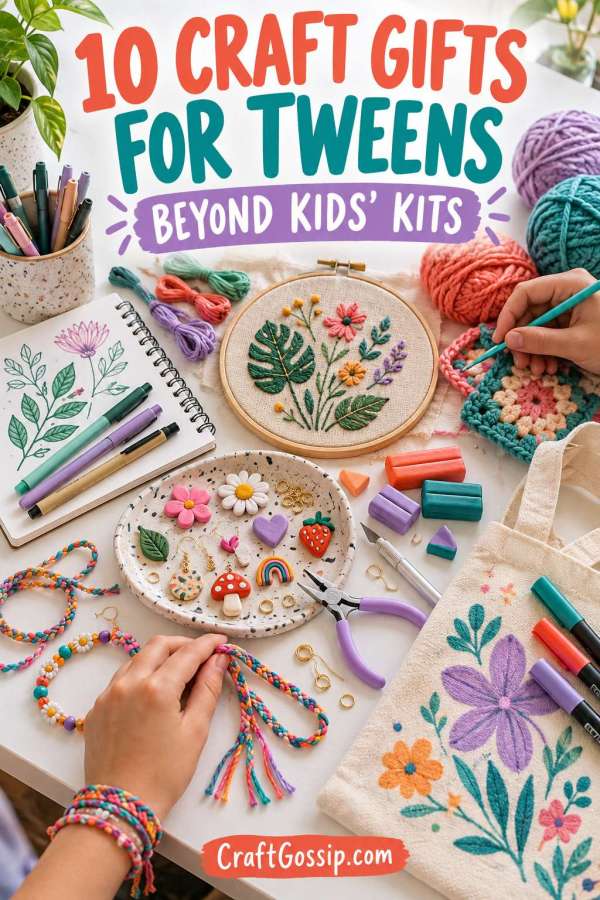
Shopping for a creative tween can be surprisingly tricky. The little paint-by-number sets and foam-sticker kits that once kept them busy for hours suddenly look “too young,” but they are not necessarily ready for a complicated project with a cupboard full of specialist tools.
This is the age when I would start thinking less about a craft activity to occupy an afternoon and more about a hobby they can make their own. Give them materials they can experiment with, tools they can use again and a finished project they would actually want in their room, on their bag or as a gift for a friend.
You do not need to guess what every tween is into. Watch what they already draw, wear, collect or make. A child who doodles characters may love better pens; one who rearranges their room every month might prefer a punch-needle piece or a painted plant pot. These Christmas craft gifts for tweens offer ten starting points, with a few things to check before you buy.
Best for: The tween who fills every spare page with drawings, lettering or character ideas.
Instead of another enormous case of assorted supplies, put together a smaller drawing set they will enjoy using: a sturdy sketchbook, fineliners and a few good-quality coloured pencils or brush pens. Browse sketchbooks and drawing pens on Amazon to see which combinations suit their style.
Check whether the pens bleed through thin paper. If they do, choose a sketchbook intended for markers or add a separate pad. A personal note inside the front cover can make this feel like their creative space, without prescribing what they should draw in it.
Best for: A tween who likes making miniatures, charms or jewellery.
Polymer clay starter supplies give an older child far more freedom than a kit that makes just one tiny object. They can try charms, miniature food, beads or pieces for a keyring.
Look for clear curing instructions and check whether the pack includes findings such as jump rings or keychain hardware. An adult should handle the oven according to the clay manufacturer’s directions. If they want a first project, this polymer clay heart charm bracelet offers an idea they can adapt in their own colours.
Best for: A patient tween who likes drawing, textiles or decorating their room.
The design makes all the difference here. A floral sampler chosen for a much younger child may be passed over, while a modern botanical, animal or lettering design might be hung up as soon as it is finished. Browse beginner embroidery kits with contemporary designs.
Check for a hoop, needle, fabric, floss and instructions that explain the stitches clearly. If the design is preprinted, find out whether the marks wash away. A little fabric bag for keeping everything together is a useful extra, because embroidery floss has an extraordinary talent for tangling itself around whatever is nearby.
Best for: A tween who makes things to wear, trade or give to friends.
This could be a box of embroidery floss, a clipboard and a pattern book, or a collection of beads, cord and findings. Choose colours and materials that suit the tween rather than relying on a kit with one predetermined style. Friendship bracelet supplies are easy to add to over time.
CraftBits has a DIY friendship bracelet tutorial they can use as a starting point. If younger siblings share the space, keep small beads and findings safely contained.
Best for: A tween who has shown an interest in yarn crafts.
A hook, suitable yarn and a beginner-friendly pattern can be a better gift than a giant crochet kit containing colours they will never use. If you crochet yourself, offer to help them learn the first stitches, then let them pick the project. A small pouch, scarf or character in their favourite colours gives them a reason to persevere.
When shopping for a beginner crochet kit, check whether it includes the hook and enough yarn to finish the advertised project. Some amigurumi kits move quickly from basic stitches to fiddly assembly, so look through the instructions before deciding it is ideal for a complete beginner.
Best for: The tween who likes texture, colour and making things for their space.
Punch-needle kits can make a small wall hanging, cushion front or decorative patch. The repeated motion is satisfying, and the finished piece can look like something they would choose for their room.
Check that the punch needle suits the fabric and yarn included. Those parts need to work together; a mismatched set is frustrating even for an experienced crafter. Look for a manageable first design rather than a large rug-sized project.
Best for: A tween with a strong sense of personal style.
Give them a blank cotton tote and fabric paints or markers so they can make a bag for library books, craft supplies or sleepovers. A simple stencil can help them get started, but leave room for their own lettering and drawings.
Check how the paint or markers must be set and washed. Put a sheet of cardboard inside the bag before decorating so the colour does not bleed through. If they become interested in making the bag itself, CraftBits’ easy lunch tote bag is another project to explore.
Best for: A tween who already enjoys beads and wants to make more polished pieces.
A pair of suitable jewellery pliers, a bead mat, findings and a few chosen beads can open up earrings, charms and necklaces. Browse beginner jewellery-making tools and supplies and check what is actually included.
This is a gift I would put together with the tween’s tastes in mind. A useful tool set and a modest selection of beads they love will get more use than a huge box of colours they would never wear. Check the age guidance and supervise sharp tools or wire cutting as needed.
Best for: A tween who wants to make something useful.
A zippered pouch, scrunchie or simple tote is a satisfying first sewing project because it has a life after the making. Put together fabric they like, matching thread, clips and a pattern, or choose a beginner sewing kit for older kids and teens.
Check whether the kit assumes access to a sewing machine and whether fabric is included. If you sew, give the gift with a promise to make the first project together. Show them how to unpick a crooked seam, too. That skill is every bit as useful as learning to sew a straight one.
Best for: A tween who already moves between several creative hobbies.
Sometimes the best gift is a place to keep the supplies they have chosen for themselves. A portable craft organiser can hold beads, embroidery floss, clay tools or paper-craft pieces. Fill a few compartments with materials you know they use, then leave space for future projects.
Check the compartment sizes before buying; tiny bead sections will not hold yarn or paint tubes. You could add a gift card or an invitation to choose supplies together. Tweens often have wonderfully specific tastes, and letting them make the final choice can be part of the gift.
Think about the finished result as well as the activity. Will they wear it, display it, give it away or use the tool again? That question helps narrow a long list of bright-looking kits very quickly.
Read the age guidance on the exact product, check which supplies are included and look for instructions that match their experience. More advanced materials may need adult help with ovens, sharp needles, cutting tools or adhesives. There is no shame in starting with a simple project made from good materials.
If you need to see which projects might appeal before buying supplies, browse 35 crafts for teens and tweens they’ll actually want to make. Choose one they point to and build the gift around it. When they have a say in the project, that box of craft supplies has a much better chance of being opened again after Christmas.