• Home
  • Suggest A DIY
  • DIY Newsletter

Craft Gossip

Independent craft blog since 2007

  • About CraftGossip
  • Our Network
    • Bath & Body Crafts
    • Candle Making Ideas
    • Crochet Ideas
    • Cross Stitch
    • Edible Crafts
    • Felting Patterns
    • Glass Art
    • Home & Garden Ideas
    • Indie Crafts
    • Jewelry Making
    • Kids Crafts
    • Knitting Patterns
    • Lesson Plans
    • Needlework
    • Party Ideas
    • Polymer Clay
    • Quilting Ideas
    • Recycled Crafts
    • Scrapbooking
    • Sewing Patterns
    • Card Making
    • DIY Weddings
    • Not Craft Ideas
  • Giveaways
  • Roundups
  • Store
  • Search

Beeswax Candle Making & Suppliers

February 27, 2011 by SandraW

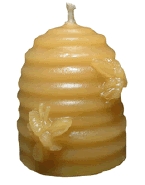
Beeswax candles burn cleaner, smell sweeter and burn longer. Another benefit is that beeswax candles actually helps get rid of allergens because they emit negatively charged ions.

If the soot created from paraffin triggers allergies, you might want to try beeswax instead. Because beeswax smells so good naturally, it’s not necessary to add fragrances.

Making Rolled Beeswax Candles

Children can safely help make rolled beeswax candles out of honeycomb sheets because they don’t need to be heated on the stove. They do need to be warmed a little with a blow dryer if you’re in a cold environment. If the beeswax sheets are cold, they could get stiff and break.

Then you simply place a cotton wick across the length of one end of the beeswax sheet and roll tightly! Rolled beeswax candles are beautiful and they’re a lot of fun to create. You can buy the sheets in any color you like and some of them even have sparkles added.

On the other hand, there’s nothing like a natural yellow beeswax candle with no chemicals or dyes added. If you’re interested in making your own beeswax candles, here a few suppliers who specialize in beeswax. Some of them have beginner candle making kits to help get you started.

Busy Bee Candle Supply,  Betterbee , Blossomland and  Brushy Mountain Bee Farm
Read These Next

  • DIY Money Saving Bathroom And Kitchen Cleaners
  • How to Make Cold Foam at Home (Easy…
«
»

Have you read?

Book Review: The No-Brainer Brain Explainer

Human brains are pretty amazing, allowing us to think, feel, create, communicate, move and more. But humans aren’t the only animals with cool brains, as Crab Museum explains in the book The No-Brainer Brain Explainer (illustrated by Bruno Valasse).

This book, aimed at kids in grades 1-4, is colorful and silly but also educational about how brains actually work, with billions of neurons sending electrical and chemical signals around the body.

“Everything we think, feel and experience comes from an electrical relay race, with neurons passing chemical batons to each other,” the book says. “The constant chatter of billions of brain cells creates your entire world.” 

The book compares the brains of mammals to those of crabs (the book is “written” by a crab after all) and notes that crabs have fewer neurons and of course are much smaller, but they have separate parts of their brains that control their eyes and their legs. Crabs are also capable of remembering things, using tools and solving puzzles. 

Some animals’ brains allow them to know more about their world in different ways from humans, such as spiders being sensitive to vibrations in their webs and catfish having an amazing sense of taste, with taste sensors all over their bodies. 

It notes that 95 percent of brain activity goes toward things we do unconsciously, like breathing, walking and catching a ball flying toward us. It also talks about dreams, memory, how our emotions try to predict the future, where brains came from and fun facts about brains. For example, did you know a sperm whale is believed to have the biggest brain of any creature that’s even lived? Their brains weigh 18 pounds, compared to just 2.5 pounds for humans. 

Information on what creatures have the smallest brains, the toughest brains, the most brains and those who actually eat their own brains will delight kids (and maybe gross them out a little bit). They’ll also enjoy learning about the mycelium network of fungi, which is like a brain without a body, and slime molds, which are like a brain without a brain. 

It ends talking about why human brains are so special because we’ve found ways to work together, communicate and build communities on a scale bigger than any other animal. 

Kids and adults alike will enjoy this colorful, silly and informational book about brains!

About the book: 64 pages, hardcover. Published 2026 by Wide Eyed Editions. Suggested retail price $19.99.


Featured Posts

Easter S’Mores

DIY: yarn wreath with felt flowers

Getting Started with Machine Embroidery

DIY Mini Scottie Dog Decoupage Tray

Vintage – Ribbon Border Quilt and FREE Quilt Block Tutorial

RSS More Articles

  • FIFA Soccer Crafts For Kids, Crochet Fans And Game-Day Makers
  • Cross Stitch Ice Cream and Frozen Treats
  • Sunflower Ribbon Embroidery Tutorials and Kits to Brighten Your Hoop
  • 15 Charity Sewing Projects That Let You Sew Something Useful For A Good Cause
  • Decorating Mistakes That Make Your Living Room Feel Cluttered
  • Remembering Jill Smokler, Founder Of Scary Mommy
  • In the Garden Layer Cake – A Bloom-Filled Fabric Collection for Spring Sewing
  • How To Do Kitchener Stitch: A Beginner-Friendly Guide To Grafting Knitting Seamlessly
  • Pattern Review: Georgie Granny Square Bucket Hat Crochet Pattern
  • Free Giant Squishy Octopus Crochet Pattern

Pick Your Blog

  • Sewing
  • Knitting
  • Quilting
  • Crochet
  • Home & Garden
  • Recycled Crafts
  • Scrapbooking
  • Card Making
  • Polymer Clay
  • Cross-Stitch
  • Edible Crafts
  • Felting
  • Glass Art
  • Indie Crafts
  • Kids Crafts
  • Jewelry Making
  • Lesson Plans
  • Needlework
  • Bath & Body
  • Party Ideas
  • Candle Making
  • DIY Weddings
  • Not Craft
  • Free Craft Projects

Copyright © 2026 · CraftGossip | Start Here | Contact Us | Link to Us | Your Editors | Privacy and affiliate policy