
These amazing books carved with surgical tools have been crafted by Brian Dettmer. You can read about his process and see more of his sculptures here.
Insane art formed by carving books with surgical tools – Karan Arora’s Posterous.
Independent craft blog since 2007
These amazing books carved with surgical tools have been crafted by Brian Dettmer. You can read about his process and see more of his sculptures here.
Insane art formed by carving books with surgical tools – Karan Arora’s Posterous.
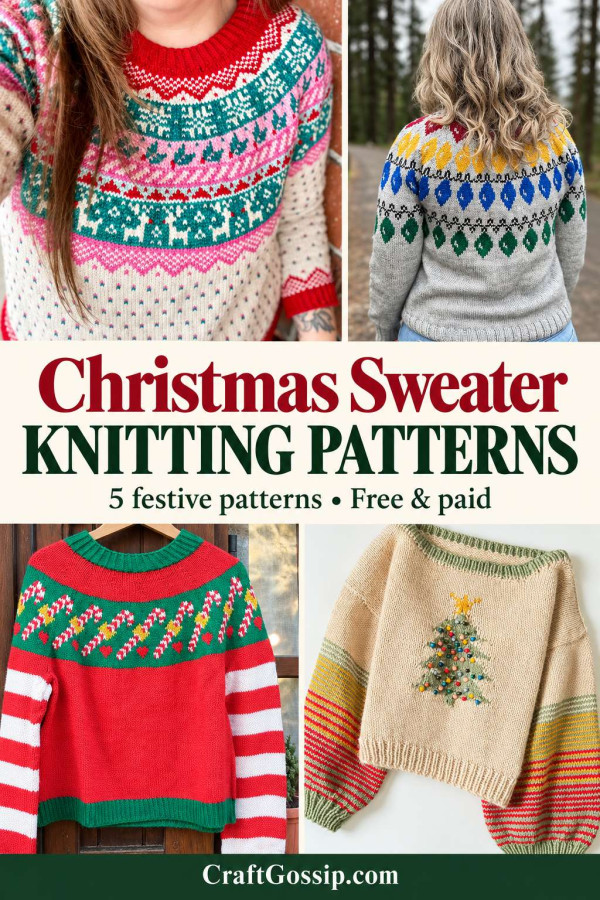
A handmade Christmas sweater can be wonderfully festive without looking as though you lost an argument with the decorations box. Although, if knitted trees and cheerful little lights are your thing, I’m certainly not going to discourage you.
The trick is choosing a pattern you will enjoy knitting as much as wearing. A colourful photograph might tempt you to cast on immediately, but it helps to know whether you are signing up for a patterned yoke, an entire sweater of colourwork or a collection of charts you arrange yourself.
These Christmas sweater knitting patterns include free adult and children’s designs, a customisable holiday pullover, vintage Christmas lights and a tree sweater decorated with wooden beads. There are options for family photographs, Christmas parties and those of us who consider choosing festive yarn a perfectly reasonable afternoon activity.
| Pattern | What makes it special | Sizing | Free or paid |
|---|---|---|---|
| Winter Doodle Sweater | Mix-and-match winter colourwork charts | Finished chest 30–72 inches | Paid |
| Merry Christmas Adult Sweater | Charted yoke with a plain body | Six sizes | Free |
| Merry Christmas Children’s Sweater | Coordinating family design | Approximately ages 2–14 | Free |
| Vintage Christmas Lights Pullover | Strings of colourful retro bulbs | Finished chest 32–68 inches | Paid |
| O Christmas Tree Sweater | Christmas tree motif and wooden beads | Finished chest 98, 110 or 122 cm | Check current listing |
Finished garment measurements are different from body measurements. Read the designer’s sizing notes before choosing your size, especially when the sweater is intended to have a relaxed fit.
A good choice for knitters who want to personalise their Christmas sweater.
If choosing colours and arranging motifs is half the fun for you, the Winter Doodle Sweater from Pacific Knit Co. deserves a look.
This is a sweater recipe with 51 winter motifs rather than one fixed arrangement. You can build your own combination of seasonal charts, keeping the overall effect restrained or happily filling it with festive detail.
The sweater is worked seamlessly from the top down, with neckline shaping and a circular yoke. The listed yarn weight is DK, and finished chest sizes range from 30 to 72 inches. The designer recommends 2–6 inches of positive ease and provides guidance on choosing a size using your upper torso measurement.
My suggestion would be to plan the colours and chart sequence before starting. A little preparation makes it easier to spot whether your favourite motifs work together, rather than discovering halfway down the yoke that everything is competing for attention.
This is an appealing option for knitters comfortable following charts who would enjoy making something distinctly their own.
A good choice for a festive yoke with plain knitting afterwards.
The free Merry Christmas sweater pattern from Hobbii is worked from the top down in the round. You follow a chart for the yoke, then separate the body and sleeves.
That structure gives you a satisfying stretch of decorative knitting before settling into the simpler sections. It is a useful balance if you enjoy colourwork but do not want every evening’s knitting to involve watching a chart.
Hobbii rates the design as intermediate and lists six sizes. The published flat widths range from 45 to 70 cm, with lengths from 50 to 64 cm.
Check the measurements carefully: the width is measured across the garment. It is not the full chest circumference.
Before buying yarn, download the pattern and check its materials, gauge and size instructions. The listing gives a gauge of 18 stitches and 25 rows over 10 cm.
If you would prefer to ease into decorative sweater knitting first, our look at the Fizz Pop colourwork sweater introduces a slip-stitch approach that uses one colour per round.
A good choice for coordinating Christmas jumpers for children and adults.
The Merry Christmas children’s sweater pattern offers seven sizes, covering approximately ages 2 through 14.
Like the adult version, it is worked in the round from the top down, with a charted yoke followed by separate body and sleeve sections. Hobbii rates it as intermediate.
The listed flat widths range from 33.5 to 47 cm. Use those measurements alongside the child’s measurements and a sweater that already fits comfortably. Age labels are a starting point, but children have clearly never agreed to grow according to a knitting chart.
For coordinated family sweaters, I would repeat the same main colour and a few accent shades. They can look lovely together without requiring every person to wear exactly the same combination.
Also consider how the finished jumper will be washed. A practical yarn choice matters when the sweater is likely to meet chocolate, craft glue or Christmas lunch.
A good choice for nostalgic Christmas colourwork.
The Vintage Christmas Lights Pullover by Sarah L Kelly features strings of colourful bulbs around the yoke.
It has that lovely old-fashioned Christmas feeling without needing every festive motif squeezed onto one garment.
This paid pattern uses DK yarn and is worked from the top down in the round, with stranded colourwork at the yoke. Finished chest measurements range from 32 to 68 inches, with a recommended 2–4 inches of positive ease.
The designer also explains options for positioning the fourth string of lights, depending on size and your preferred arrangement.
Small quantities of contrasting yarn could be useful here, provided they are compatible with the main yarn. Check thickness, fibre behaviour and washing instructions before treating the leftovers basket as an all-you-can-knit buffet.
I would choose a background that lets the bulbs stand out clearly. Lay your proposed shades together and take a quick photograph before committing.
For another route into a patterned sweater, our Forage sweater feature explores a design with colourwork near the top and a plain body.
A good choice for a statement Christmas jumper with added texture.
The O Christmas Tree Sweater by Yasmin Ansari combines a Christmas tree motif, striped sleeves and integrated wooden beads.
The cropped shape and wide sleeves give it a playful vintage feel. It is the sort of sweater that can do most of the festive dressing for you.
The designer lists three sizes with finished chest circumferences of 98, 110 and 122 cm. Body lengths are 47, 47 and 50 cm, so check the cropped length against your preferred fit.
The suggested yarn is DROPS Nepal, listed as Aran weight, with a gauge of 14 stitches and 20 rows over 10 cm using 6 mm needles. The pattern includes colourwork charts and instructions for adding the beads.
Check the bead holes against the specified crochet hook before starting. Discovering that your lovely beads will not fit the tool is a particularly irritating way to interrupt an otherwise enjoyable project.
This would be my pick for someone who wants a Christmas sweater that feels decorative, tactile and a little bit cheeky.
A free pattern can still require confident knitting skills. Before casting on, check whether you need to read charts, manage stranded colourwork, work short rows or shape a sweater in the round.
If several of those techniques are new, practise them on a small sample first. Learning one new skill is enjoyable. Learning four while trying to meet a Christmas deadline can become rather less festive.
Read the designer’s instructions for selecting a size. Some patterns use bust measurements, while others recommend an upper torso measurement.
Positive ease is the extra room between your body and the finished garment. For example, a 44-inch sweater worn around a 40-inch bust has 4 inches of positive ease.
Also check sleeve width, yoke depth and body length where those measurements are provided. A comfortable chest measurement alone does not guarantee your preferred fit.
Make your gauge swatch using the stitch pattern and method specified by the designer. If the garment is knitted in the round, a flat stockinette square may not tell you enough about how your colourwork will behave.
Wash and dry the swatch as you intend to treat the sweater before measuring it.
Check that the fabric stretches comfortably and that the strands carried behind the work are not pulling the motifs tight. Blocking helps settle stitches, but it cannot reliably rescue floats that are much too short.
Body length, sleeve length and the amount of colourwork can all affect yarn requirements.
If you are comparing yarn at Mary Maxim, start with the pattern’s recommended weight, fibre and meterage. Then swatch your choice. A familiar weight label does not guarantee an identical fabric.
For a stranded sweater, choose colours with enough contrast for the motifs to remain visible. Two gorgeous shades can look disappointingly similar once they are knitted side by side.
Try a winter palette rather than an obviously festive one. Cream and navy, soft grey and forest green, or natural wool shades can give colourwork a longer season.
Snowflakes and geometric motifs are particularly useful when you want a sweater that still feels appropriate after the tree comes down.
Our Riverwinds holiday sweater feature offers another example of a colourwork design that can feel festive through its palette without relying on novelty Christmas motifs.
Some are, but check the actual techniques rather than relying on the seasonal theme. The Hobbii patterns featured here are rated intermediate. A plain sweater in festive colours may be a more comfortable first garment.
Yes, if the yarns are compatible and you have enough for the sections you plan to knit. Similar thickness, washing requirements and fabric behaviour make the combination easier to manage.
Not without changing the fabric and potentially the finished size. Follow the pattern’s gauge and substitution guidance. Simply choosing the same labelled garment size will not compensate for a different knitting gauge.
That depends on your size, knitting pace, yarn weight and the design. Use your swatch to estimate how quickly you knit, then allow additional time for sleeves, finishing, washing and drying.
I would rather choose a manageable project and enjoy it than spend December negotiating with an unfinished sleeve.
Whether you fancy a custom colourwork yoke, cheerful little lights or a tree decorated with wooden beads, choose the sweater you can picture yourself wearing. Festive knitting should leave you with something you love, along with a very good excuse to sit down with your yarn.